Consumables and equipment
Air receivers
Vertical and horizontal receivers to store air, smooth demand and protect the compressor.
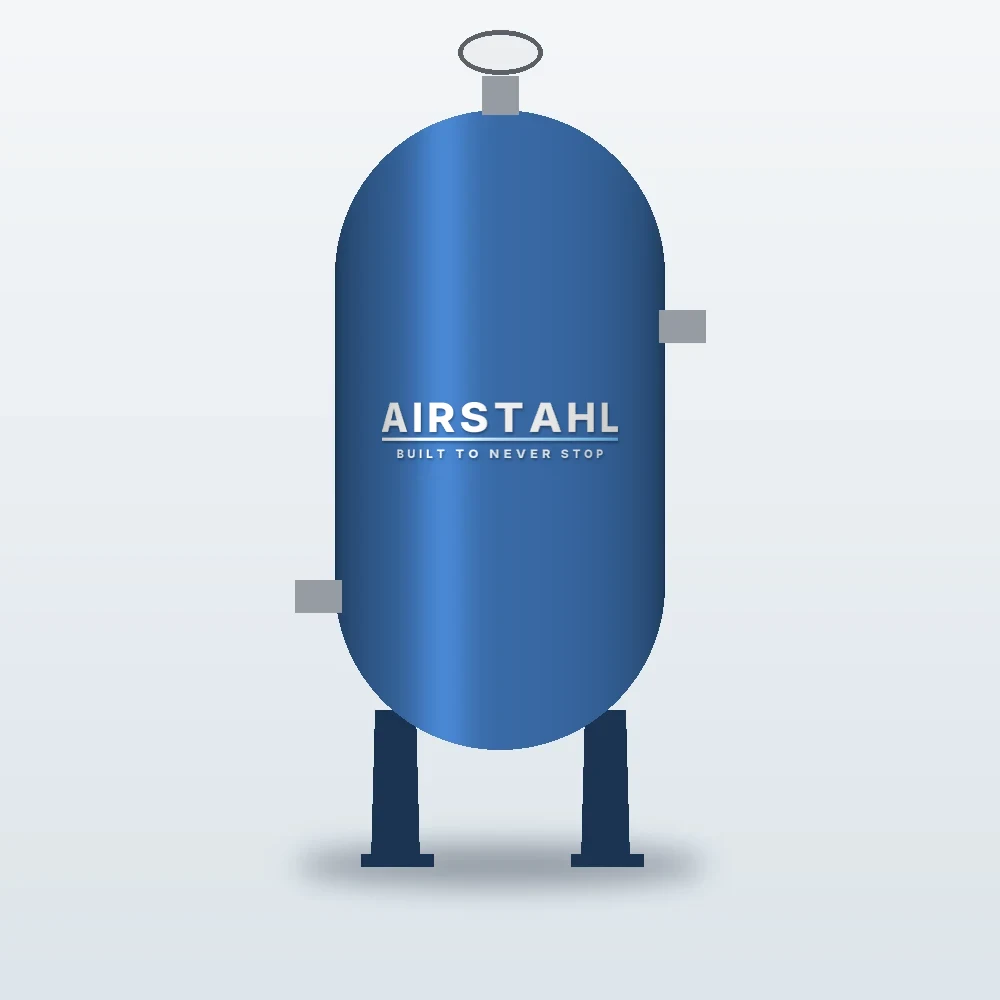
Vertical air receiver, painted steel 1,000 L 10 bar
Vertical air receiver, painted steel 1,000 L 13 bar
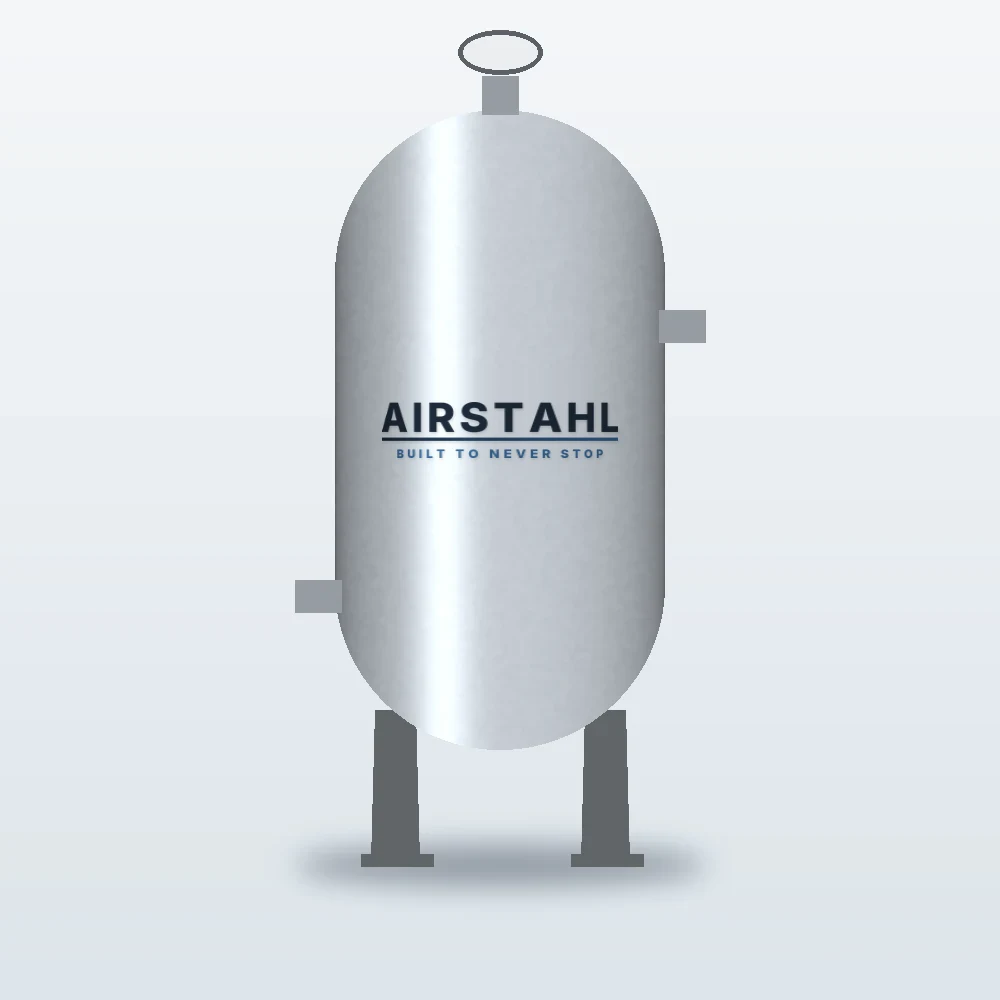
Vertical air receiver, galvanised 1,000 L 10 bar
Vertical air receiver, galvanised 1,000 L 13 bar
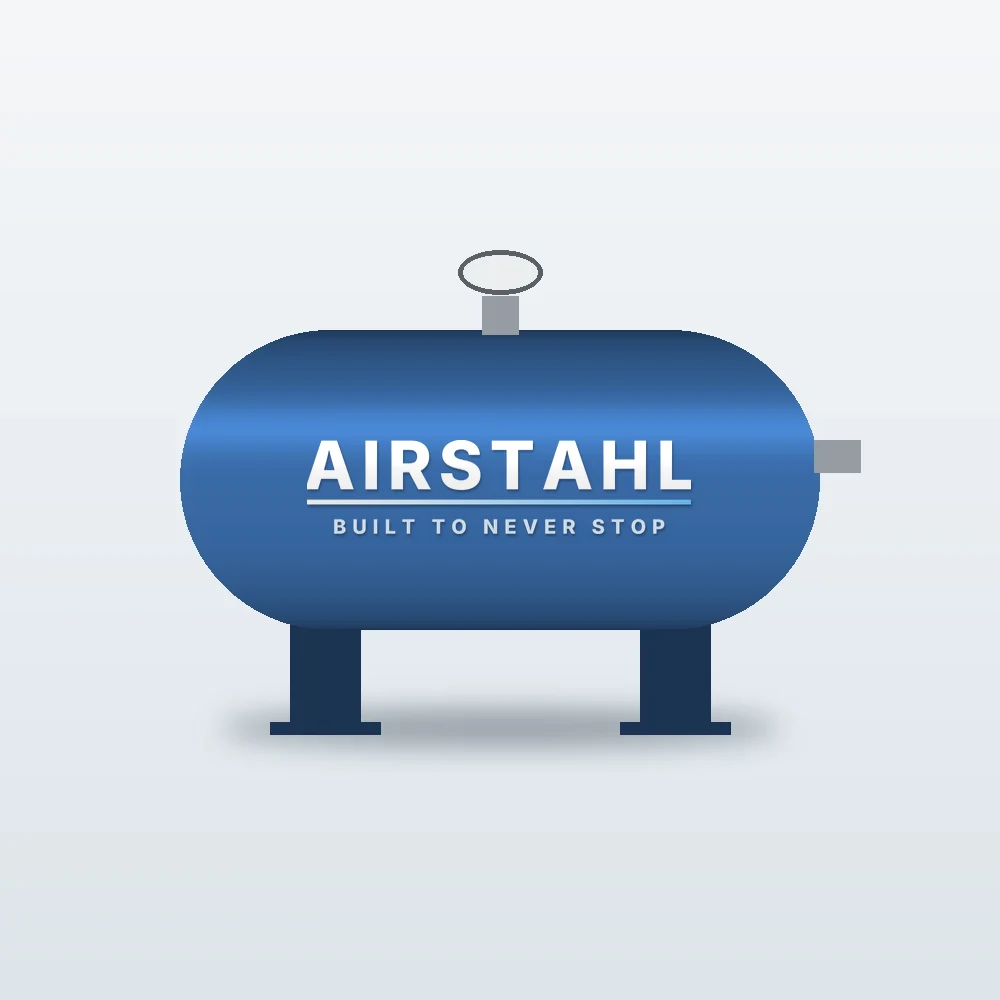
Horizontal air receiver
What is a compressed air receiver for?
The receiver stores the air produced by the compressor. It absorbs consumption peaks, stabilises the pressure in the network and reduces the number of compressor starts, which spares the machine. It also acts as a first separator: the air cools down in it and some of the water settles at the bottom, where it is drained.
Vertical or horizontal, painted or galvanised?
- Vertical: it takes up little floor space and is the most common format in workshops.
- Horizontal: it fits under a workbench, on a mezzanine or in a room with a low ceiling.
- Painted steel: the economical choice when a dryer is installed upstream.
- Galvanised steel: the zinc protects against corrosion; recommended without a dryer, in damp rooms or outdoors.
What volume to choose?
The volume depends on the compressor's air flow, the workshop's consumption and the acceptable pressure band. Our receiver size calculator gives a first estimate. Air receivers are pressure equipment subject to regulations: our guide on compressed air receivers summarises the obligations.
Frequently asked questions — Air receivers
What size air receiver do I need for my compressor?
The volume depends on the compressor's air flow, the gap between the cut-out and cut-in pressures, and the maximum number of starts per hour: a piston compressor tolerates fewer than a screw compressor. The site's free receiver size calculator does the maths (V = 0.25 × Q × p0 / (f × Δp)) and shows the recommended standard receiver, from 100 to 3000 L. For a spray booth or very irregular demand, size up; we confirm the volume on quotation.
Vertical or horizontal air receiver?
Both do the same job: storing air, smoothing demand and protecting the compressor. The choice is mainly about space: a vertical receiver takes up less floor area, while a horizontal one suits rooms with a low ceiling. Either way, keep the drain valve and the pressure gauge easy to reach.
Can a bigger air receiver replace a more powerful compressor?
No. The receiver stores air and absorbs short peaks in demand, but it produces nothing: if your average consumption exceeds the compressor's air flow, pressure will eventually drop, whatever the size of the receiver. A larger receiver does, however, reduce the number of starts and stabilise pressure. To choose the right machine, use the site's configurator.
How do I drain an air compressor tank?
Open the drain valve at the lowest point of the receiver until the air comes out free of water, then close it; do this regularly, and more often in humid weather. An automatic condensate drain means it is never forgotten. Condensate from a lubricated compressor contains oil: it must be treated, not poured straight down the drain.
Do air receivers need statutory inspections?
Pressure vessels can be subject to periodic inspections, depending on their volume and maximum pressure. Check the regulations that apply to your equipment and keep its documentation. The site's Maintenance and inspections page introduces our inspection partner, who can carry out these checks.
Can I add an air receiver to a screw compressor?
Yes. AIRSTAHL screw compressors from 5.5 to 132 kW are supplied without a receiver or dryer, precisely so they can be paired with a receiver suited to your network. The receiver goes between the compressor and the dryer, with a flexible connection on the machine side to absorb vibration. The screw compressor 7.5 kW 4-in-1 already includes a 420 L receiver; we recommend the right volume for your installation on quotation.
Need a part?
Give us the model and serial number, and we will confirm the correct part number.