Sandblasting
Compressor for sandblasting
Screw compressor for sandblasting: air flow sized to the nozzle, 2.2 to 3.6 m³/min at 8 bar, dry filtered air, rental from 5.5 to 132 kW. 2-year warranty.
Sandblasting, or abrasive blasting, throws a hard abrasive such as corundum, steel grit, slag or glass bead at high energy. It strips mill scale, heavy rust and old coatings, and leaves the surface profile that paint needs to grip. Steel structures, chassis, tanks, wheels and machine parts are blasted in a booth, in the workshop or on site. The blast pot meters the abrasive, but it is the compressor that gives it speed. Without enough air, pressure drops at the nozzle and the job slows down. If you strip delicate surfaces at low pressure, read our page on the compressor for soft blasting instead: sandblasting needs far more air.
How much air does a sandblaster need?
Nozzle size decides everything. Air consumption rises with the square of the bore: a nozzle twice as wide uses about four times as much air. These are typical trade figures, for guidance only, at around 7 bar at the nozzle:
| Nozzle bore | Typical consumption |
|---|---|
| 5 mm | ≈ 1,500 L/min (1.5 m³/min) |
| 6 mm | ≈ 2,300 to 2,500 L/min |
| 8 mm | ≈ 4,000 L/min |
| 10 mm | ≈ 6,000 L/min |
| 12 mm | ≈ 9,000 to 10,000 L/min |
Start from the figure your blast pot manufacturer gives, then add a margin. Nozzles wear and open up: a 6 mm nozzle worn to 7 mm uses roughly a third more air. Allow for a blow gun and for losses in the hose too.
Example: a blast booth with a 6 mm nozzle. The starting need is about 2,400 L/min. With a 25% margin for nozzle wear and blow-off, you aim for 3,000 L/min, or 3 m³/min. A 15 kW compressor is no longer enough: you need to move up to 22 kW. Our flow and pressure converter switches between L/min, m³/min, bar and psi.
On pressure, sandblasting usually runs at around 6 to 7 bar at the nozzle. A long or narrow hose loses part of it: keep the compressor close to the blast pot, use a large-bore hose and set the compressor to 8 bar.
Which compressor for a sandblaster?
Small blast pot, nozzle up to 5 mm
The K 150, a 15 kW 4-in-1 screw compressor, delivers 2.2 m³/min at 8 bar. Compressor, 340 L air receiver, refrigerated dryer and filtration sit on one frame, so the air reaches the blast pot dry. If the workshop already has a receiver and dryer, the S 150 gives the same flow as a standalone compressor.
Blast booth, 6 mm nozzle
The S 220 PM, a 22 kW screw compressor with a permanent magnet motor, delivers 3.6 m³/min at 8 bar and 3.8 m³/min at 7 bar. It is the machine in the range that keeps a 6 mm nozzle going with headroom for wear. It comes without receiver or dryer: pair it with a receiver, the refrigerated dryer for 22 kW and fine filters.
8 mm nozzles and above, or several blasters
Above 22 kW, the S series goes up to 132 kW on quotation. A large nozzle or several blast pots running together is an industrial project, sized from your actual air consumption.
A one-off job: rent
A few weeks of blasting rarely justify buying a machine. Our screw compressor rental covers 5.5 to 132 kW, with servicing included and no commitment. We pick the machine from your nozzle size, and you send it back when the job is done. The site needs a 380 V three-phase power supply.
What air quality for sandblasting?
Water first. Air leaves the compressor warm and full of moisture, which condenses in the receiver and the hose. Wet abrasive clumps, blocks the metering valve and comes out in bursts. On freshly blasted steel, moisture brings back flash rust before painting. A refrigerated dryer at the compressor outlet and an automatic condensate drain on the receiver solve the problem.
Then oil. Our compressors are oil-lubricated: the S 220 PM leaves at most 3 ppm of oil in the air at the compressor outlet. Before painting or metal spraying, fine filters catch the aerosols that would spoil adhesion. Define the target air class with our technicians under ISO 8573-1, explained in our air quality guide.
The blaster's helmet. Breathing air for an air-fed helmet follows its own rules and needs dedicated treatment, to be studied separately with our technicians.
Installation and maintenance
Abrasive dust is the compressor's worst enemy. Install it outside the booth, in a separate, ventilated room with a clean air intake. Check the air filter often: in blasting, it is the part that clogs fastest. Drain the receiver every day if it has no automatic drain.
On screw compressors, the first service is due at 500 hours, then every 1,500 hours, with a reminder shown on the controller. Our service kits group filters, oil and separator by model. Machines carry a 2-year warranty and spare parts stay available for 15 years.
To price your set-up, start from your nozzle in the configurator, estimate the power bill with the electricity cost calculator, then request a quote.
Frequently asked questions — Sandblasting
Which compressor for a sandblaster with a 6 mm nozzle?
A 6 mm nozzle uses about 2,300 to 2,500 L/min at 7 bar, as a guide, and more as it wears. With a margin, aim for about 3 m³/min. The S 220 PM, a 22 kW screw compressor, delivers 3.6 m³/min at 8 bar and 3.8 m³/min at 7 bar; pair it with an air receiver, a refrigerated dryer and fine filters.
Is a 15 kW compressor enough for sandblasting?
The K 150 and S 150 deliver 2.2 m³/min at 8 bar. That is enough for a nozzle of up to about 5 mm, which uses around 1,500 L/min as a guide, while keeping a margin for wear. Beyond that, move up to 22 kW or to a larger S series machine on quotation.
What is the difference between a sandblasting and a soft blasting compressor?
Sandblasting uses larger nozzles and higher pressure, often around 6 to 7 bar at the nozzle, so it needs much more air flow. Soft blasting uses fine media at low or medium pressure, and a 15 kW compressor is often enough. In both cases the air must be dry.
Do I need an air dryer for sandblasting?
Yes. Moisture makes the abrasive clump, blocks the metering valve and brings flash rust back on freshly blasted steel. A refrigerated dryer at the compressor outlet and an automatic drain on the receiver solve the problem. The K series has them built in; the S series is paired with a dryer sized to its power.
Can I rent a compressor for a sandblasting job?
Yes. We rent screw compressors from 5.5 to 132 kW, with servicing included and no commitment: you send the machine back when the job is done. We choose the machine from your nozzle size. The site needs a 380 V three-phase supply.
Does a 100-litre sandblaster need a bigger compressor?
No. The 100 litres refer to the volume of the pot, that is, how much abrasive it holds, not how much air it uses. The compressor is chosen from the nozzle: with a 5 mm nozzle, plan on a 15 kW screw compressor; with a 6 mm nozzle, a 22 kW screw compressor. Our article on the compressor for a 100-litre sandblaster goes through the details.
Is one compressor enough for an 8 mm blasting nozzle?
Rarely. An 8 mm nozzle uses about 4,000 L/min at 7 bar, as a guide, and with a margin for wear you should aim for at least 5 m³/min. That is more than the 3.8 m³/min at 7 bar of the S 220 PM, our 22 kW screw compressor. The usual answer is two screw compressors in parallel, or a larger S series machine, up to 132 kW on quotation.
In what order should the compressor, receiver, dryer and filters be fitted for a blast cabinet?
A common order is: screw compressor, then the air receiver with its automatic drain, the refrigerated dryer, the fine filters and finally the cabinet air inlet. Placed before the dryer, the receiver cools the air and collects part of the water, which takes load off the dryer. With a 5 mm nozzle, the K 150 4-in-1 already combines compressor, receiver, dryer and filtration on one frame.
The recommended models
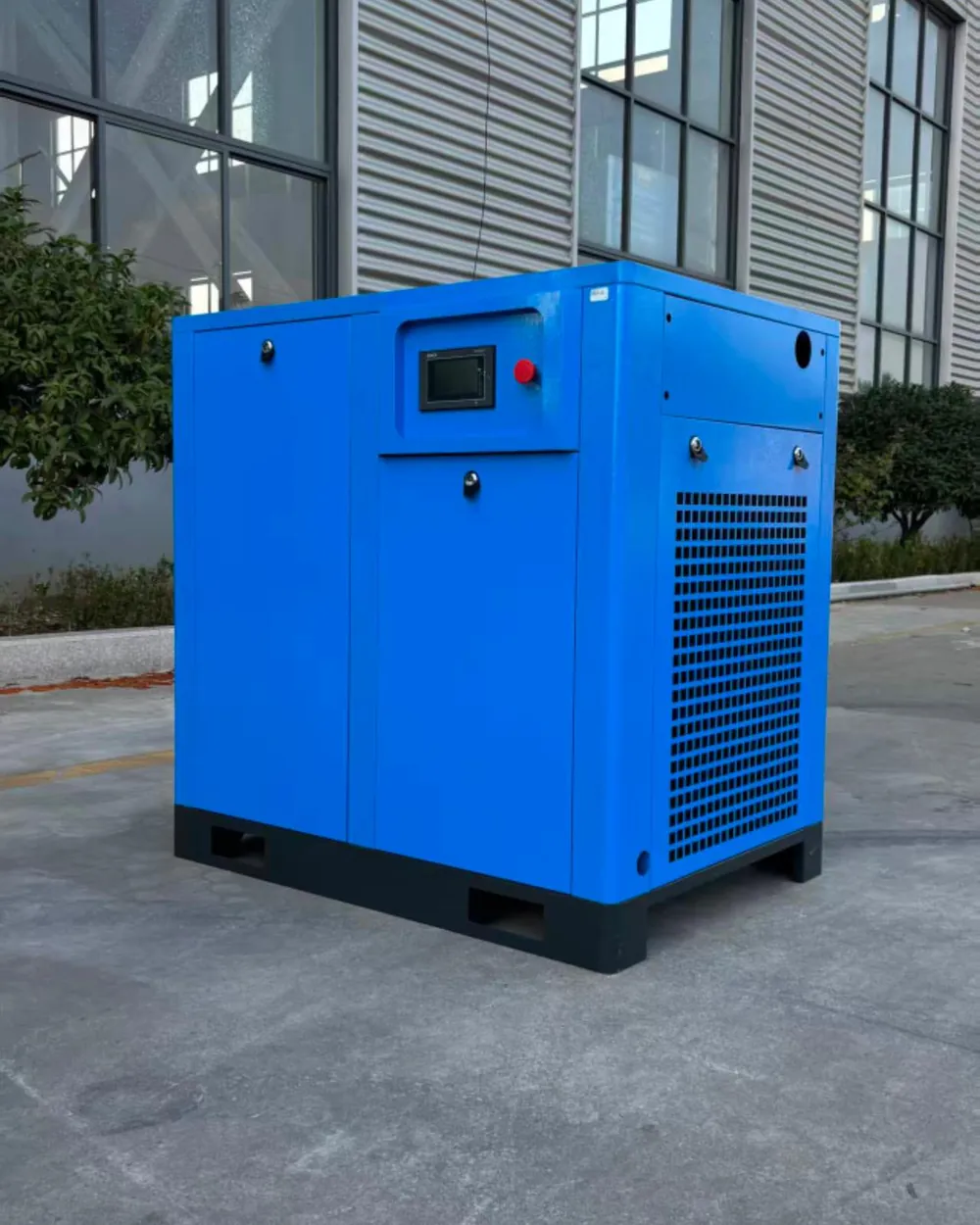 22kW
S 220 PMScrew compressor 22 kW permanent magnet
Permanent magnet motor, 10 bar: the industrial machine of the range.
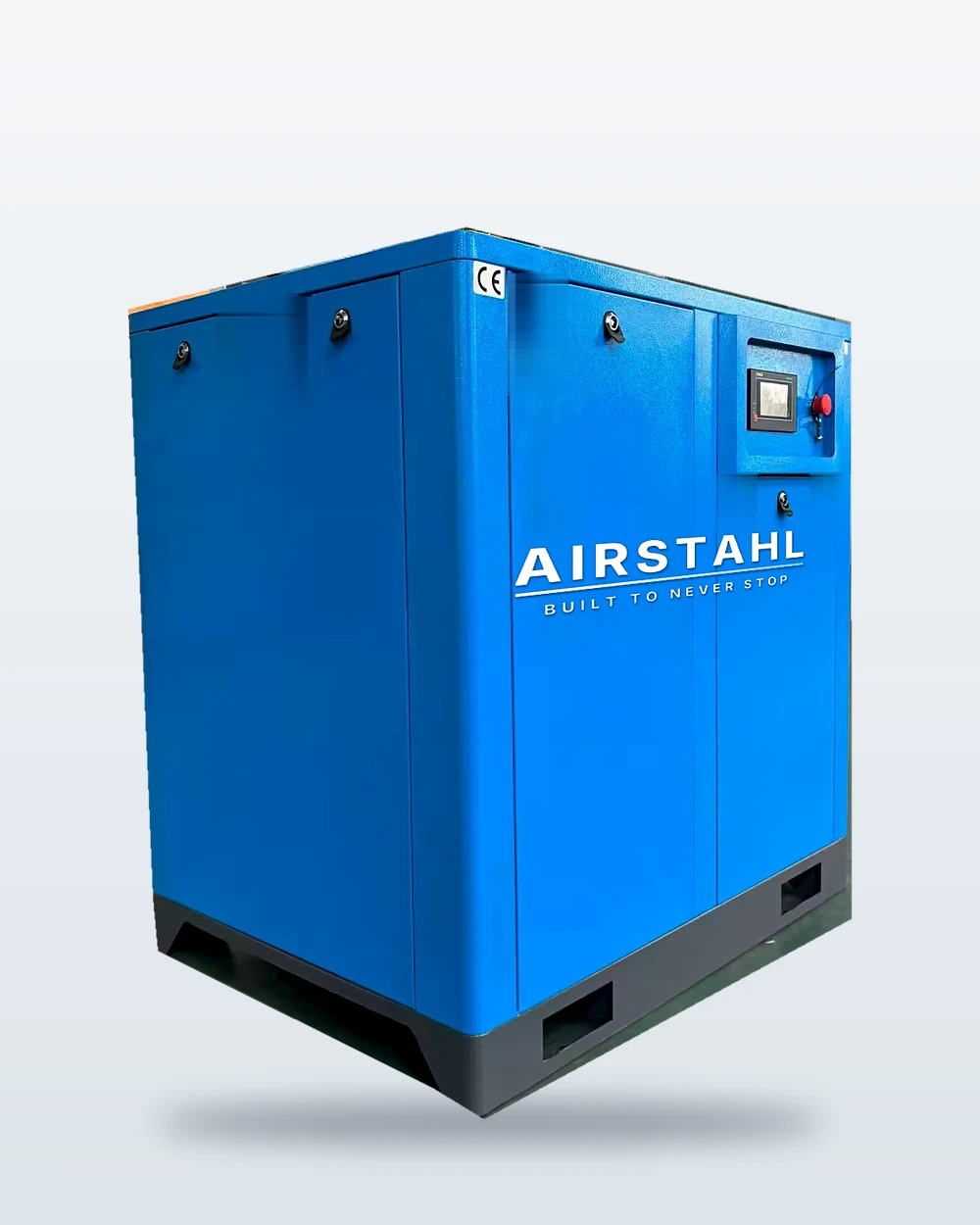 15kW
S 150Screw compressor 15 kW
For production workshops and truck workshops with high air consumption.
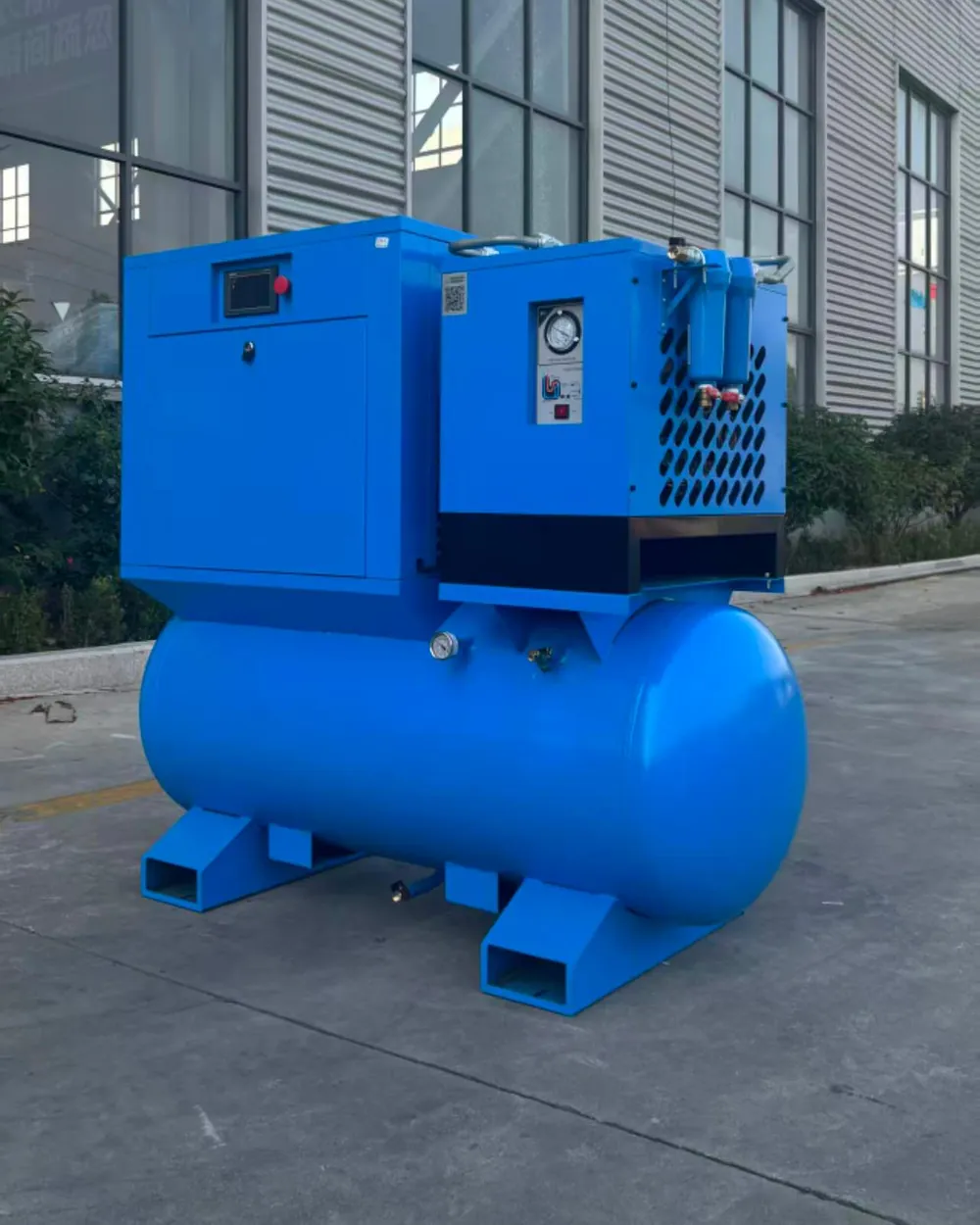 15kW
K 150Screw compressor 15 kW 4-in-1
Compressor, air receiver, refrigerated dryer and filtration combined on a single frame, at 15 kW.
Other trades
A project, a question?
We answer quickly and quotes are free. Tell us what you run on air and we'll point you to the right model.