Electronics and assembly
Compressor for electronics manufacturing and assembly
Screw compressor for electronics manufacturing, SMT lines, pick and place, air screwdrivers and test benches. Dry, filtered air, K series 4-in-1 or S series.
Compressed air does more work in an electronics plant than most people expect. On SMT lines it feeds the pick and place machines, their vacuum generators and their feeders. At the assembly stations it drives the air screwdrivers. It also blows dust off boards and housings, moves the cylinders on test benches and press-fit stations, and controls the conveyors. All of these machines ask for the same thing: dry, clean air at a stable pressure.
How much air does an electronics workshop need?
Add up what each machine consumes, take into account how many run at the same time, then add a margin. The figures below are typical orders of magnitude, given for guidance only: the exact consumption is on each manufacturer's data sheet.
- SMT pick and place machine: 50 to 200 l/min, often continuous while the line is running.
- Air screwdriver for assembly: 150 to 300 l/min while running, but only a few seconds per screw.
- Blow gun: 150 to 250 l/min while blowing.
- Test bench or press with cylinders: 20 to 100 l/min depending on the number and size of the cylinders.
Example of a typical workshop with two SMT lines:
- 2 pick and place machines at 150 l/min, running continuously: 300 l/min.
- 8 screwdrivers at 200 l/min, with 2 running at the same time on average: 400 l/min.
- 4 blow guns at 200 l/min, one at a time: 200 l/min.
- 3 test benches at 50 l/min: 150 l/min.
Total: 1,050 l/min. With a 20% margin for leaks and future equipment, you need around 1,260 l/min, or 1.3 m³/min. Most of these machines work at around 6 bar, so a compressor set to 8 bar covers the need, including the pressure drop in the network. Our flow and pressure converter switches between l/min and m³/min.
Which compressor for electronics manufacturing?
Small assembly or repair workshop: the K 75
One placement machine for prototypes or short runs, a few screwdrivers and a blow gun: the K 75 is enough. It delivers 1.1 m³/min at 8 bar and puts the compressor, a 420 L air receiver, the refrigerated dryer and the filtration on a single frame. At 66 ± 2 dB(A), it can sit in a room next to the workshop.
Several SMT lines: the K 110 or the K 150
The example above needs 1.3 m³/min. The K 110 delivers 1.7 m³/min at 8 bar and leaves room for a third line. Beyond that, the K 150 goes up to 2.2 m³/min at 8 bar. Both have a 340 L air receiver, dryer and filtration built in, so the air enters the network already dry. The K series runs at variable speed and follows the changes in demand from the lines.
Multi-shift site or existing air network: the S series
If you already have an air receiver and air treatment, or if a machine needs drier air than a refrigerated dryer can provide, a standalone compressor is more flexible. The S 110 (1.7 m³/min at 8 bar) or the S 150 (2.2 m³/min at 8 bar) from the S series is paired with the dryer and filters chosen for the air class you need. For larger sites, the S series goes up to 132 kW on quotation, as an industrial project.
What air quality does electronics need?
Three contaminants matter: water, oil and particles.
- Water condenses in the pipes and can end up on a board when blowing. It also fouls placement nozzles and vacuum generators. A refrigerated dryer is the starting point.
- Oil: our screw compressors are oil-lubricated. At the compressor outlet, the air still contains a few ppm of oil (3 to 5 ppm according to the S series data sheets). Fine filters, mounted in series, hold back the oil aerosols. For the most sensitive uses, such as blowing directly onto boards, an activated carbon filter is added for oil vapour.
- Particles block nozzles and wear valves. A general-purpose filter followed by a fine filter stops them.
The ISO 8573-1 standard sets quality classes for these three contaminants. The right class depends on your machines: check what the manufacturers of your SMT equipment and test benches require, then work out with our technicians which dryer and filtration will meet it. Our ISO 8573-1 air quality guide explains the classes, and our article on fine filters covers the filtration stages. If a machine requires a pressure dew point below zero, you need a desiccant dryer.
Installation and maintenance
- The compressor room. Install the compressor outside the production area, in a ventilated, frost-free room so the dryer works properly. It draws in the surrounding air: clean intake air means less work for the filters. Our article on the compressor room sets out the rules.
- Condensate. The compressor, air receiver, dryer and filters produce water that contains oil. An automatic condensate drain removes it, and an oil-water separator treats it before discharge.
- Filters. Replace the elements on schedule. A saturated filter lets contaminants through and costs you pressure.
- Compressor servicing. First service at 500 hours, then every 1,500 hours, with a reminder on the controller. Our service kits group the parts for each model. 2-year warranty, spare parts available for 15 years.
To size your installation, use the configurator, estimate your power use with the electricity cost calculator, then send us your list of machines in a quote request.
Frequently asked questions — Electronics and assembly
Is an oil-lubricated screw compressor suitable for electronics?
Yes, as long as the air is treated. Our screw compressors are oil-lubricated: at the outlet, the air contains a few ppm of oil (3 to 5 ppm according to the S series data sheets). A refrigerated dryer and fine filters in series, with an activated carbon filter where needed, bring the air to the class your machines require. That class is defined with our technicians.
Which ISO 8573-1 air class does an SMT line need?
It depends on your placement machines, your test benches and how you use blow-off. Check what the manufacturers specify on their data sheets, then work out with our technicians which dryer and filtration will meet it. Our ISO 8573-1 air quality guide explains the three figures: particles, water and oil.
How much air does a pick and place machine use?
As a guide, an SMT placement machine uses 50 to 200 l/min, often continuously while the line is running. The exact figure is on the manufacturer's data sheet. Add up the machines, screwdrivers and blow guns running at the same time, then add a margin of around 20% for leaks and future equipment.
Do I need a desiccant dryer for electronics?
Not always. A refrigerated dryer gives a pressure dew point of +3 to +10 °C, which is enough for most assembly workshops. If a machine requires a dew point below zero, you need a desiccant dryer. Your equipment data sheets decide.
K series or S series for an electronics workshop?
The K series puts compressor, air receiver, refrigerated dryer and filtration on one frame, the simplest option for a workshop without a treated air network. The K 75 delivers 1.1 m³/min at 8 bar, the K 110 1.7 m³/min and the K 150 2.2 m³/min. The S series suits sites that already have a receiver and air treatment, or that need specific treatment such as a desiccant dryer.
How much air for 1, 2 or 3 SMT lines?
A typical line, with two placement machines, a screen printer and its loaders, uses around 400 l/min continuously. With a margin, plan on about 0.6 m³/min for one line (K 75), 1.1 m³/min for two (K 110, to keep a reserve) and 1.7 m³/min for three (K 150). These are orders of magnitude: the real figure comes from your machines' data sheets. See our article on SMT line air consumption.
Which compressor for 10 pneumatic screwdriving stations?
You do not add up the 10 screwdrivers: each one runs only a few seconds per screw. Depending on the type of screwdriver and the cycle rate, you generally need 0.6 to 1.3 m³/min at 6 bar at the station. The K 75 (1.1 m³/min at 8 bar) covers most lines; for impulse screwdrivers or a high cycle rate, move up to the K 110 (1.7 m³/min at 8 bar).
Why does tightening torque vary from one screwdriving station to another?
A pneumatic screwdriver's torque depends on the pressure it receives: if pressure drops when several stations drive screws together, the screws are less tight. Set the compressor to 8 bar and fit each station with a regulator set to the value in the manual. Avoid pipes that are too small or too long, and provide an air receiver for simultaneous starts: the K 75 and K 110 include 420 L and 340 L.
The recommended models
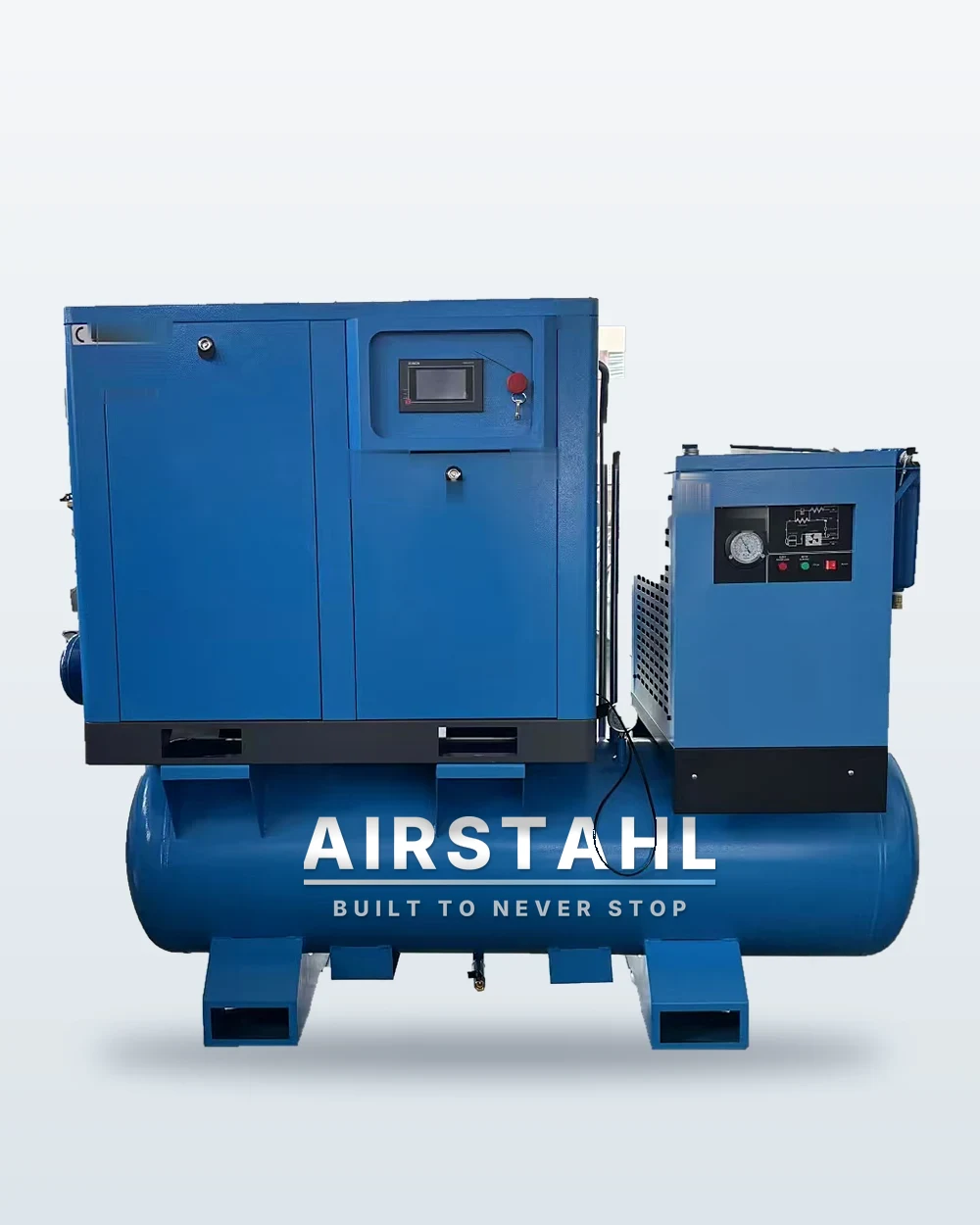 7.5kW
K 75Screw compressor 7.5 kW 4-in-1
Compressor, 420 L air receiver, refrigerated dryer and filtration combined on a single frame.
11kW
K 110Screw compressor 11 kW 4-in-1
Compressor, air receiver, refrigerated dryer and filtration combined on a single frame, at 11 kW.
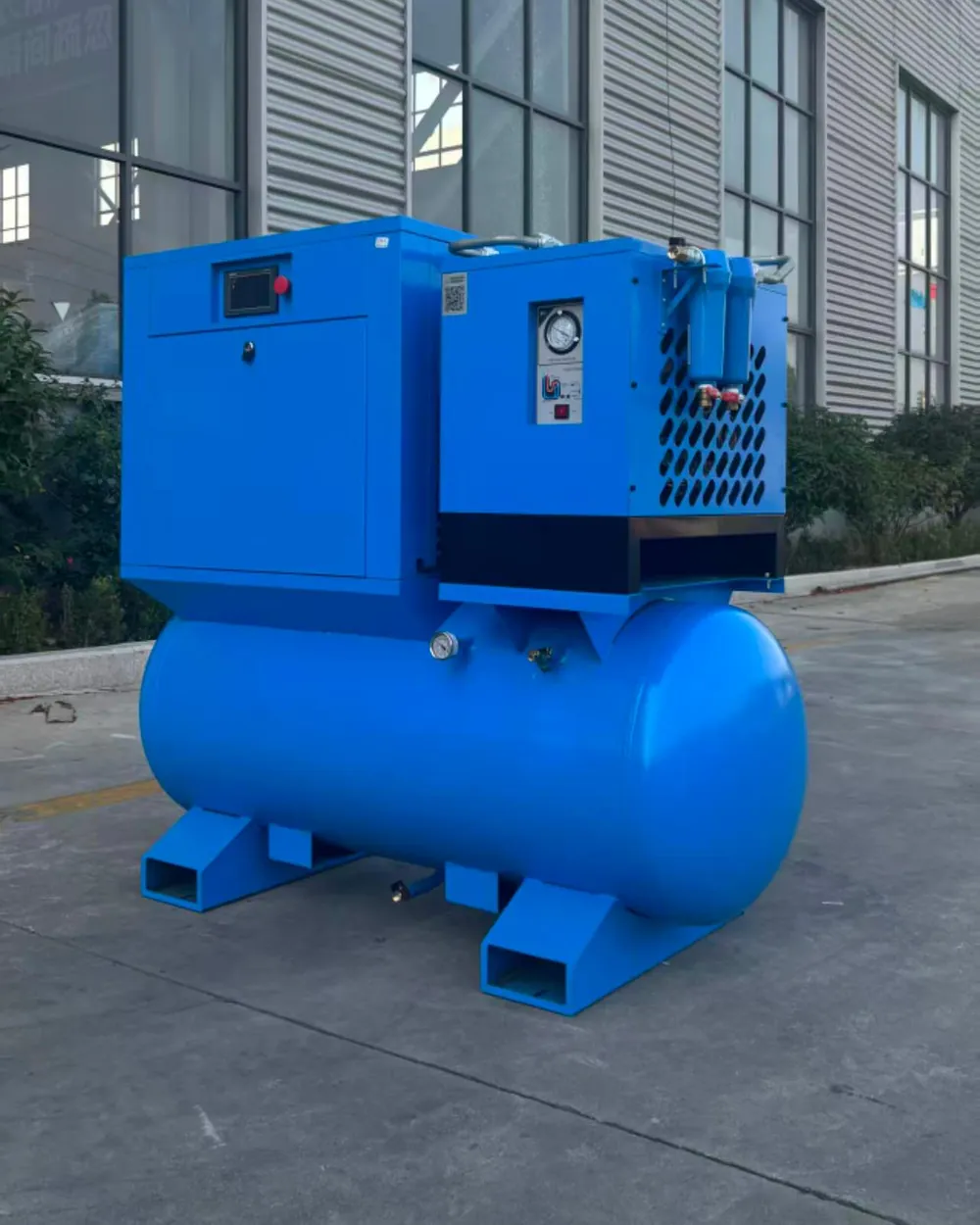 15kW
K 150Screw compressor 15 kW 4-in-1
Compressor, air receiver, refrigerated dryer and filtration combined on a single frame, at 15 kW.
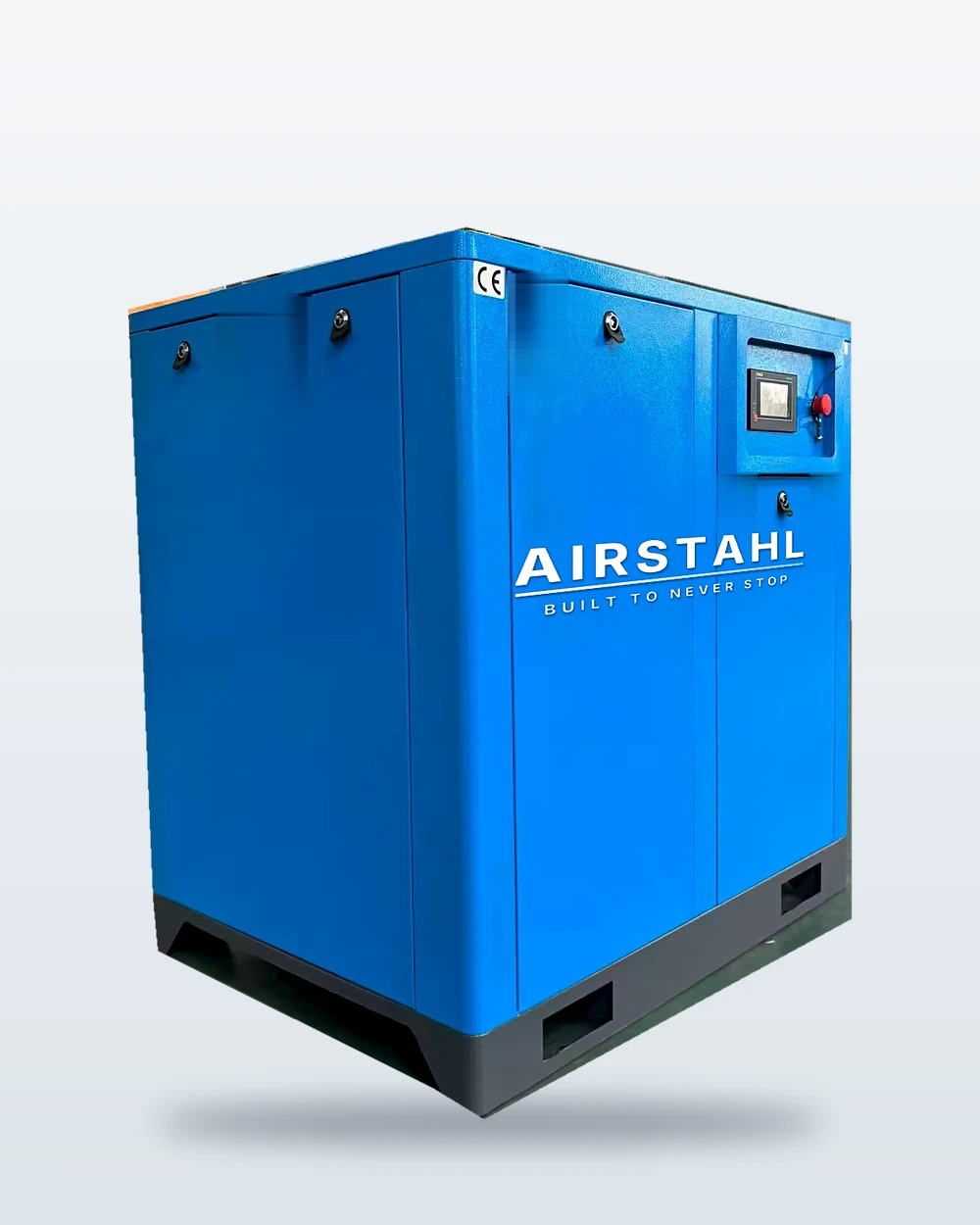 11kW
S 110Screw compressor 11 kW
The power to supply several workstations at the same time, without losing pace.
Other trades
A project, a question?
We answer quickly and quotes are free. Tell us what you run on air and we'll point you to the right model.