Foundry and forge
Compressor for foundries and forges
Screw compressor for foundries and forges, for core making, moulding, fettling, shot blasting, air hammers. Variable speed S series up to the 22 kW S 220 PM.
In a foundry, compressed air is used at every stage. It blows sand into the core boxes, drives the cylinders of moulding machines and shake-out grids, powers the grinders and chipping hammers in the fettling shop, and propels abrasive in shot blasting and sandblasting cabinets. In a forge, it operates press and manipulator cylinders, blows scale off the work and sprays lubricant onto the dies. All of this in a hot, dusty shop that often runs several shifts.
How much air does a foundry or forge need?
Add up the air consumption of the tools that run at the same time, then add a margin. Our configurator uses a 25 % margin. In fettling, grinders run almost non-stop, so count them at 100 %.
Example of a fettling shop in a foundry making medium-sized castings (indicative figures, check them against your tool data sheets):
- 3 air grinders at 450 l/min: 1,350 l/min
- 2 chipping hammers at around 400 l/min: 800 l/min
- core shooter cylinders and blow guns: 300 l/min
- total: 2,450 l/min, or 3,060 l/min with a 25 % margin
That matches the S 220 PM, which delivers 3.6 m³/min at 8 bar (3,600 l/min). To convert l/min to m³/min or bar to psi, use our flow and pressure converter.
Air-blast shot blasting and sandblasting cabinets are a separate case. Their consumption depends on the nozzle diameter and rises as the nozzle wears. Use the cabinet manufacturer's figure for your nozzle. A wheel blast machine, on the other hand, uses little air: mainly for pulse-cleaning its filters and for its controls.
Many forging power hammers have their own built-in compressor. Check the manual: only hammers and percussion tools connected to the air network count in the calculation.
Which compressor for a foundry or forge?
- Small forge or fettling shop, 1 or 2 stations: the S 150, a 15 kW screw compressor, delivers 2.2 m³/min at 8 bar. It covers two grinders, a blow gun and the cylinders of a press, with capacity to spare. If you prefer a single unit to install, the K 150 combines the same compressor with a 340 L air receiver, a refrigerated dryer and filtration.
- Foundry with core making, moulding and fettling running together: the S 220 PM, a 22 kW screw compressor with a permanent magnet motor. It delivers 3.6 m³/min at 8 bar and 3.2 m³/min at 10 bar. The whole S series is variable speed: when stations stop between two pours, the compressor slows down instead of running unloaded.
- Site on two or three shifts, several blasting cabinets: above 22 kW, the S series goes up to 132 kW, on quotation. We handle these installations as an industrial project, including the network, air receivers and air treatment. A compressed air audit of your existing system is a good starting point.
What air quality for a foundry or forge?
- Water. This is the main problem. Damp abrasive sticks, clogs the metering valve and comes out in bursts. Damp core sand does not hold well. On blasted steel, moisture brings rust back. A refrigerated dryer after the compressor is essential as soon as you blast or make cores. Our article on which air dryer to choose explains the options.
- Oil. Our compressors are oil-lubricated. General filtration is enough for tools and cylinders. For spraying coatings and die lubricants, add fine filters at the point of use.
- Dust. It mainly enters through the air the compressor draws in: see the installation section below.
If a customer or a process requires a specific air class, define it according to ISO 8573-1 with our technicians. Our ISO 8573-1 air quality guide explains how to read these classes.
Installation and maintenance in a hot, dusty environment
- A separate room. Never install the compressor near the furnaces, the pouring area or the fettling stations. Put it in an enclosed room that draws fresh air from the clean side of the building.
- Getting rid of heat. An air-cooled screw compressor rejects a lot of heat. Duct the hot air outside. Above 25 °C in the room, the configurator calls for a larger capacity dryer. Our article on the compressor room sets out the ventilation rules.
- The intake filter. Foundry sand and metal dust are abrasive. Check the air filter far more often than in a clean workshop: a clogged filter makes the machine run hot and loads the oil with particles.
- Condensate. Hot, humid air produces a lot of water. An automatic drain on the receiver and the low points of the network avoids missed drains. Condensate contains oil: collect it and have it treated.
- Maintenance. On our screw compressors, the first service is at 500 hours, then every 1,500 hours, with a reminder shown on the controller. On multi-shift operation those hours come round quickly, so keep a service kit in stock. The compressors carry a 2-year warranty and parts remain available for 15 years.
To size your installation, start with the configurator, estimate your energy bill with the electricity cost calculator, then send us a quote request with a list of your stations.
Frequently asked questions — Foundry and forge
Which compressor for a foundry?
For a foundry running core making, moulding and fettling at the same time, the S 220 PM (22 kW, permanent magnet motor) delivers 3.6 m³/min at 8 bar. A small forge or a fettling shop with 1 or 2 stations can start with the S 150, which delivers 2.2 m³/min at 8 bar. Beyond that, the S series goes up to 132 kW, on quotation.
How much air does an air grinder or chipping hammer use?
Our configurator counts 450 l/min for an air grinder. A chipping hammer uses around 400 l/min as an indicative figure: check your tool's data sheet. In fettling these tools run almost continuously, so add them up at 100 % and allow a 25 % margin.
Do I need a dryer for shot blasting and sandblasting?
Yes. Damp abrasive sticks, clogs the metering valve and comes out in bursts, and moisture brings rust back on blasted steel. A refrigerated dryer after the compressor solves the problem. The K series already includes one, together with the air receiver and filtration.
Does a forging power hammer need a compressor?
Not always. Many pneumatic power hammers have their own built-in compressor. Check the manual: only hammers and percussion tools connected to the air network count when sizing the compressor.
How do I protect a compressor in a hot, dusty foundry?
Install it in a separate room away from the furnaces and fettling area, with fresh air drawn from the clean side and hot air ducted outside. Check the intake filter far more often than in a clean workshop, because sand and metal dust are abrasive. Keep to the services at 500 hours and then every 1,500 hours, and keep a service kit in stock.
How many grinders can a 22 kW compressor supply?
The S 220 PM delivers 3,600 l/min at 8 bar. With grinders at around 450 l/min, chipping hammers at around 400 l/min and a 25 % margin, it supplies about six grinders running continuously, or four grinders and two chipping hammers. Redo the count with your own tool data sheets, as shown in our article how many grinders and chipping hammers on a 22 kW compressor.
Should I set the compressor to 10 bar to give the grinders more power?
No, unless the tool manual requires it. A screw compressor delivers less air as pressure rises: the S 220 PM drops from 3.6 m³/min at 8 bar to 3.2 m³/min at 10 bar, and six grinders no longer fit. If pressure is short at the end of the line, the cause is almost always the network: pipes too small, quick couplings too narrow, hoses too long. Fix the network before touching the setting.
Why should shot blasting nozzle wear be monitored?
Because air consumption roughly follows the square of the diameter. A 6 mm nozzle worn to 7 mm uses about (7 ÷ 6)² = 1.36 times more air, a third more: from 2,400 to about 3,270 l/min. Even the S 220 PM can no longer keep up and the pressure drops at the nozzle. Measure the nozzle at regular intervals and replace it before it has grown by a millimetre: that costs less than a bigger compressor.
The recommended models
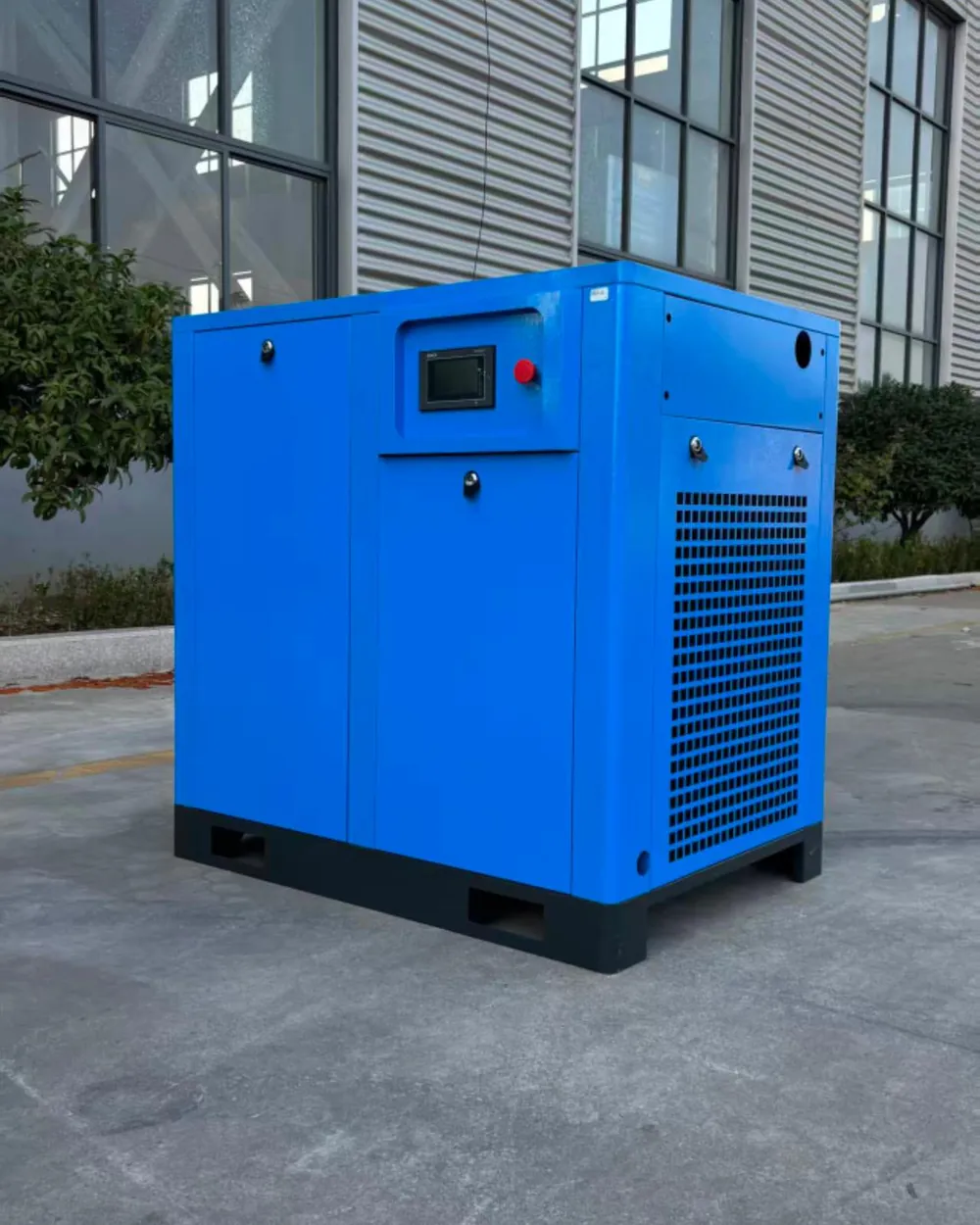 22kW
S 220 PMScrew compressor 22 kW permanent magnet
Permanent magnet motor, 10 bar: the industrial machine of the range.
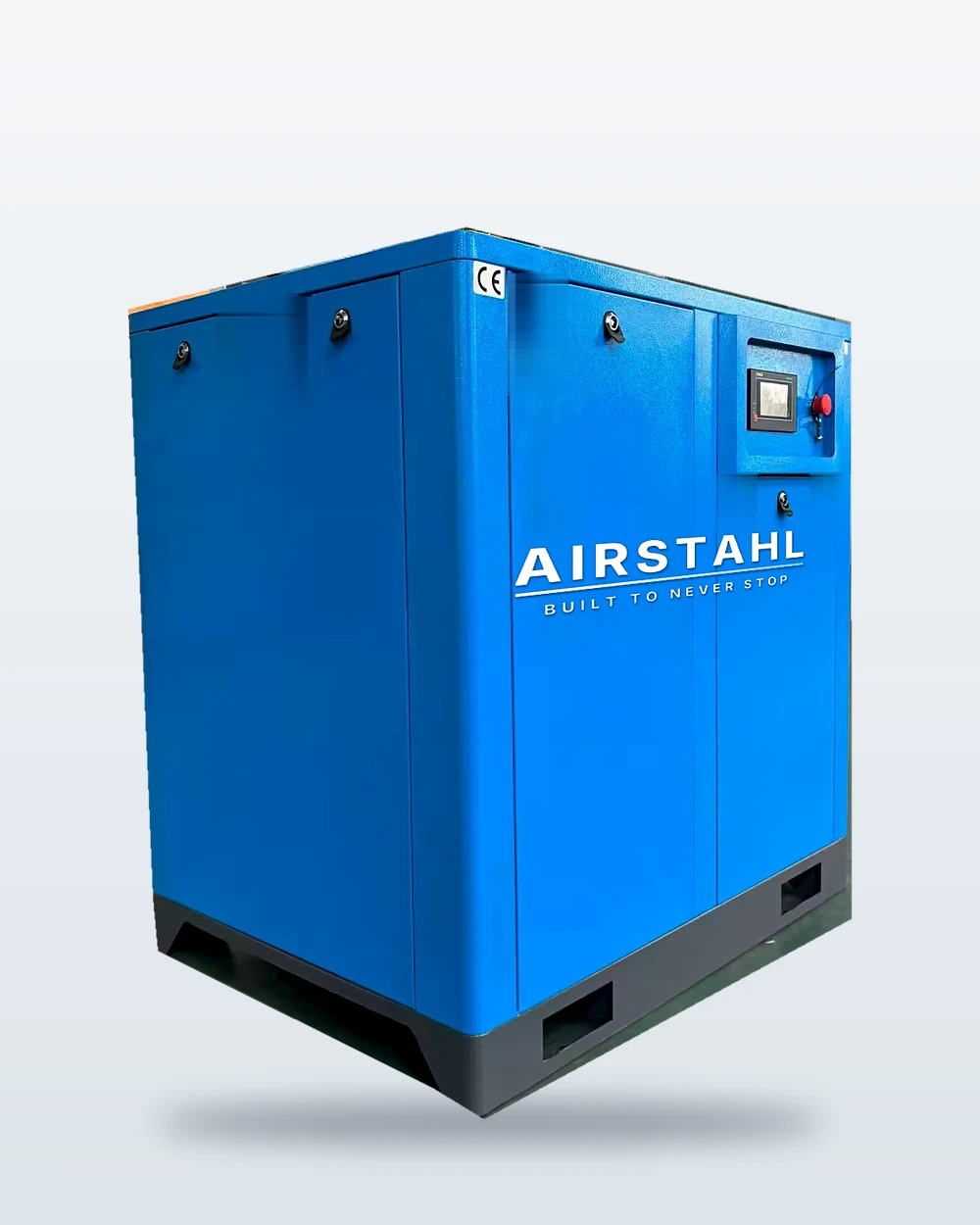 15kW
S 150Screw compressor 15 kW
For production workshops and truck workshops with high air consumption.
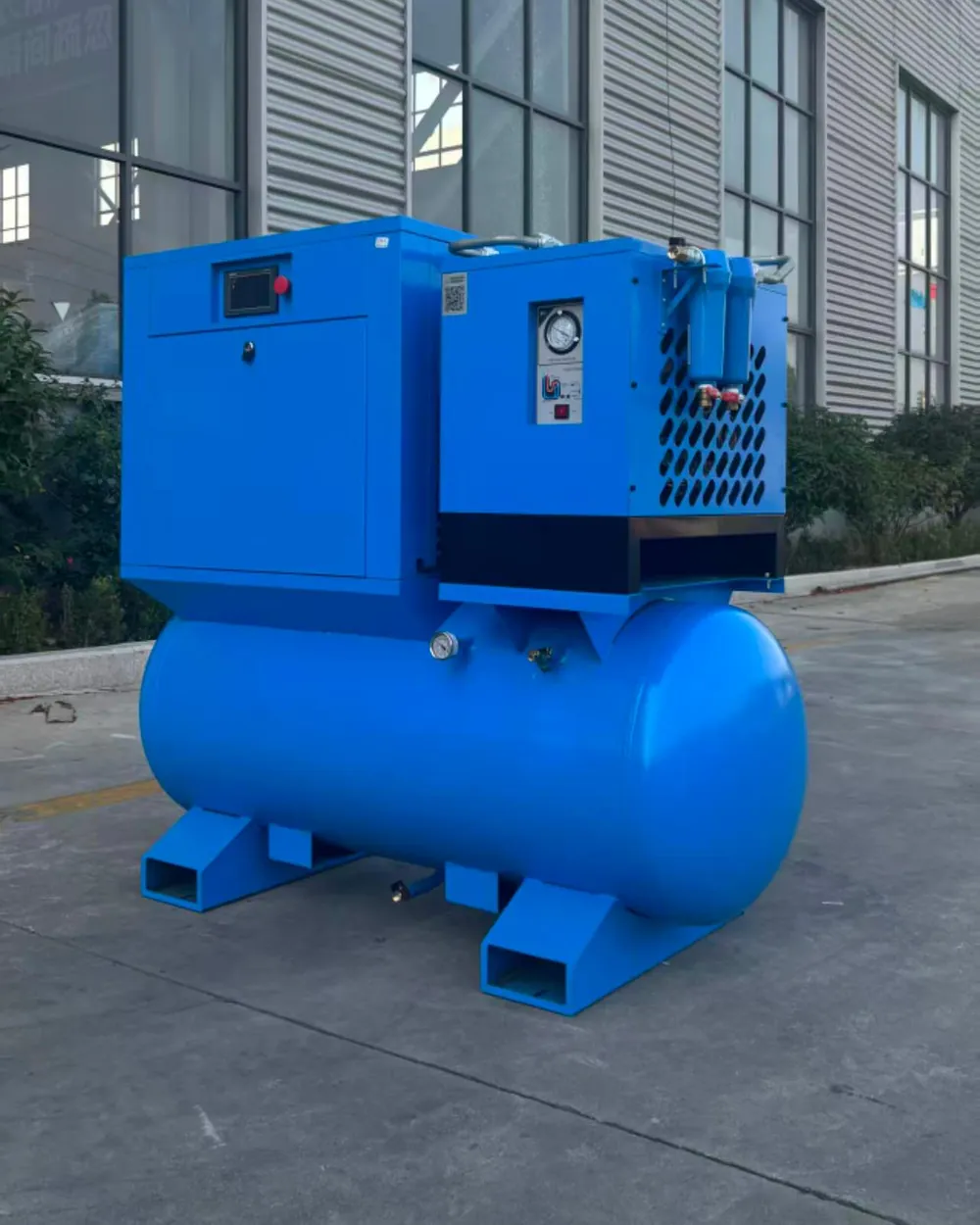 15kW
K 150Screw compressor 15 kW 4-in-1
Compressor, air receiver, refrigerated dryer and filtration combined on a single frame, at 15 kW.
Other trades
A project, a question?
We answer quickly and quotes are free. Tell us what you run on air and we'll point you to the right model.