CNC machining
Compressor for CNC machining and machining centres
Screw compressor for CNC machine shops: tool changers, pneumatic clamping, spindle air and chip blow-off. Flow worked out, dry filtered air, 2-year warranty.
In a machine shop, compressed air does far more than blow chips away. On a machining centre it drives the tool changer and the drawbar release, pressurises the spindle so coolant cannot reach the bearings, closes pneumatic fixtures and vices, and opens the automatic doors. On CNC lathes and sliding-head (Swiss-type) machines it actuates chucks and collets and pushes bar stock through the bar feeder. When the pressure drops, the machine throws an alarm and stops: the compressor is part of your machine park.
How much air does a machine shop need?
A machine tool uses little air for its own functions, and mostly in short bursts: a tool change, a clamp, a door. The big consumer is blow-off, which runs continuously. The figures below are indicative only; the exact consumption is in each machine's manual.
- Machining centre (tool changer, clamping, spindle air, intermittent blow-off): roughly 50 to 150 l/min on average.
- CNC lathe or sliding-head machine with bar feeder: roughly 30 to 80 l/min.
- Hand blow gun or open blow-off nozzle: roughly 150 to 250 l/min while it is blowing.
A typical shop: four machining centres at 100 l/min, two lathes at 50 l/min and two blow guns in use about half the time. That makes 400 + 100 + 200 = 700 l/min. Add a 30% margin for leaks and one more machine later, and you need about 900 l/min, or 0.9 m³/min. Our flow and pressure converter turns l/min into m³/min and into the CFM used in many machine manuals.
What pressure does a CNC machine need?
Every machine builder states a minimum inlet pressure, often around 6 bar. Below it, the machine's pressure switch raises an alarm. Allow for losses in the pipework, dryer and filters, and set the compressor at around 7 to 8 bar. There is no point going higher: every extra bar costs electricity and makes the network leak more.
Which compressor for a machine shop?
- Shop with 3 to 5 machines: the K 75, a 7.5 kW 4-in-1 screw compressor, delivers 1.1 m³/min at 8 bar. Compressor, 420 L air receiver, refrigerated dryer and filtration share one frame, so the air reaches the machines dry with no system to design. It covers the example shop above.
- Shop with 6 to 10 machines, or heavy blow-off: the K 150 delivers 2.2 m³/min at 8 bar, still as a 4-in-1. If you already have a receiver and dryer, or the room means they must sit apart, the S 150 gives the same flow as a standalone compressor.
- Bar turning and two- or three-shift production: the S 220 PM, with its permanent magnet motor, delivers 3.6 m³/min at 8 bar. Where losing air stops the whole shop, two compressors sharing the load are better than one bigger unit. Beyond that, the S series goes up to 132 kW, on quotation.
The S and K series are variable speed. In machining, demand changes all the time, and the compressor follows it instead of cycling between load and idle. See variable speed or fixed speed.
What air quality do machine tools need?
Air leaves the compressor hot and full of moisture. As it cools in the pipework, that water condenses. Inside a machine tool it makes valves and tool changer cylinders stick and, worse, it can reach the spindle bearings with the sealing air. On freshly machined steel, a blow gun that spits water also leaves rust marks.
The basic treatment is a refrigerated dryer followed by filtration for particles and oil aerosols. Our compressors are oil-lubricated, so it is the downstream filtration that captures carried-over oil. Some builders specify an air quality class for spindle air: find it in the manual and agree the treatment with our technicians, using our guide to ISO 8573-1 air quality. A fine filter at the machine adds a last line of protection.
Installation and maintenance
- The room. Machine shop air carries coolant mist and metal dust. Put the compressor in a separate, ventilated room with its intake away from the machines. See our article on the compressor room.
- Condensate. An automatic condensate drain on the receiver and at the low points of the network does the job reliably. This condensate contains oil: collect it and have it treated, never pour it down the drain. See water in compressed air.
- Leaks. Quick couplings, blow gun hoses, solenoid valves: a machine shop has leak points everywhere. The leak cost calculator puts a figure on them.
- Servicing. First service at 500 hours, then every 1,500 hours, with a reminder on the controller. On two shifts these come round quickly, so keep a service kit in stock. The screw compressor maintenance guide covers each step. Compressors carry a 2-year warranty and parts remain available for 15 years.
To size your installation, start with the configurator, check the receiver volume with the air receiver size calculator, or send us your machine list with a quote request.
Frequently asked questions — CNC machining
How much air does a machining centre use?
As an indication, a machining centre uses roughly 50 to 150 l/min on average for the tool changer, clamping and spindle air. Blow-off weighs more: an open blow gun uses roughly 150 to 250 l/min. Add up the machines and blow guns running at the same time, add about 30% margin, and check each machine's manual for its exact consumption.
What pressure does a CNC machine need?
The machine builder states a minimum inlet pressure, often around 6 bar. Allowing for losses in the pipework, dryer and filters, a compressor set at around 7 to 8 bar is usually enough. Going higher only raises the electricity bill and the leakage, with no benefit for the machines.
Why does machining centre spindle air need to be dry?
Spindle sealing air keeps coolant out of the bearings. If it carries water or particles, it delivers them exactly where it was meant to protect. A refrigerated dryer and filtration after the compressor are the basis; if the builder specifies an ISO 8573-1 class, our technicians work out the right treatment with you.
Is a central compressor better than one compressor per machine?
In a shop with several machines, one central screw compressor with a properly sized network is usually easier to maintain and more economical than a set of small compressors. Where losing air stops all production, two compressors sharing the load give you back-up. We size the installation from your machine list.
How can I cut the air used for chip blow-off?
Control blow-off with a solenoid valve so it only runs during the cycle, use proper blow-off nozzles rather than open pipes, and reduce the pressure to what is needed with a regulator. Track down leaks on quick couplings and hoses too. Our leak cost calculator shows how much you can save.
Can the machine shop compressor also supply an air-assisted laser cutter?
Rarely as it stands. Laser cutting with air can need much more than the 6 to 8 bar of a workshop network, and much drier, cleaner air, because it reaches the optics of the cutting head. The figure to use is the one given by the laser manufacturer. Our L series combines an 8 to 16 bar screw compressor, a 16 bar air receiver, a refrigerated dryer and precision filtration. See our article on the compressor for laser cutting.
How much does compressed air cost in a machine shop?
Divide the compressor power by the air it produces in one hour, then multiply by your price per kWh. With the S 110: 1.7 m³/min at 8 bar, or 102 m³ per hour, and 11 ÷ 102 ≈ 0.11 kWh per m³. That is a theoretical minimum: idle running, leaks and excessive pressure push the real cost up. The electricity cost calculator on the site gives an order of magnitude for your running hours.
A machine shows a low-pressure alarm: should I set the compressor to 10 bar?
Not as a first step. An alarm at the end of the network usually comes from pressure losses: pipe too small, quick couplings too narrow, clogged filter. Raising the pressure costs money, roughly 7 % more energy per extra bar, and reduces the flow: the S 110 drops from 1.7 m³/min at 8 bar to 1.4 m³/min at 10 bar. Measure the pressure at the machine inlet, then fix the network.
The recommended models
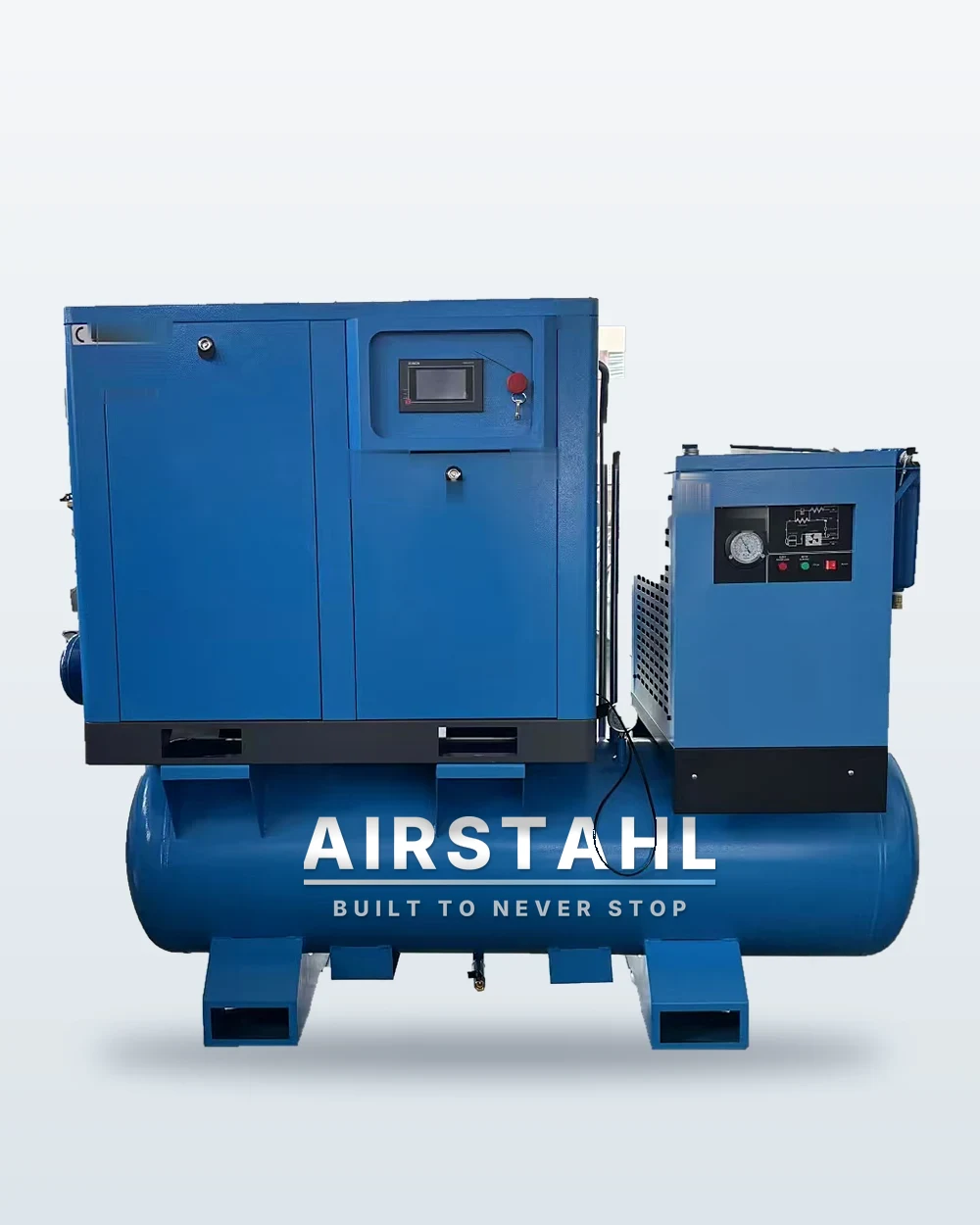 7.5kW
K 75Screw compressor 7.5 kW 4-in-1
Compressor, 420 L air receiver, refrigerated dryer and filtration combined on a single frame.
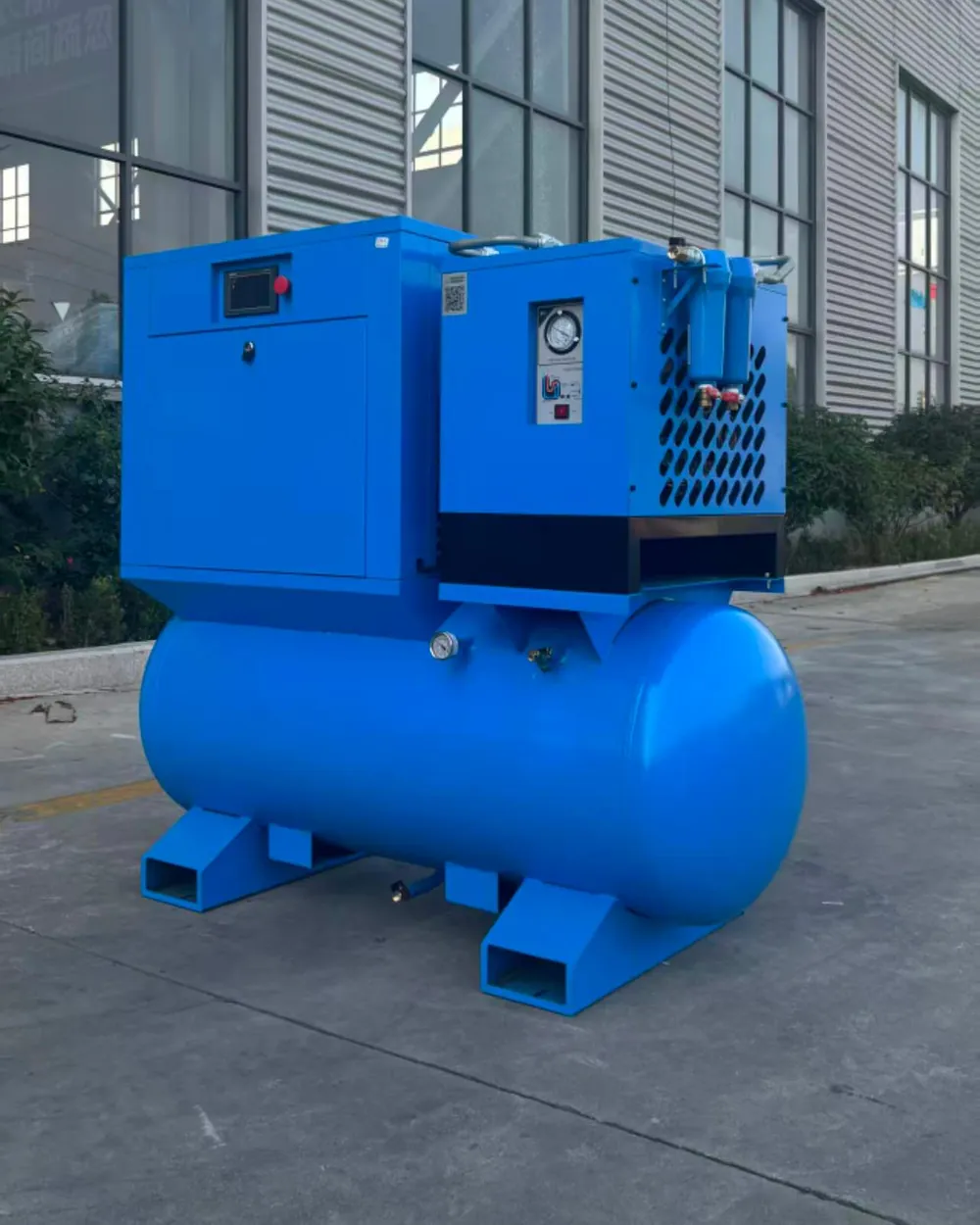 15kW
K 150Screw compressor 15 kW 4-in-1
Compressor, air receiver, refrigerated dryer and filtration combined on a single frame, at 15 kW.
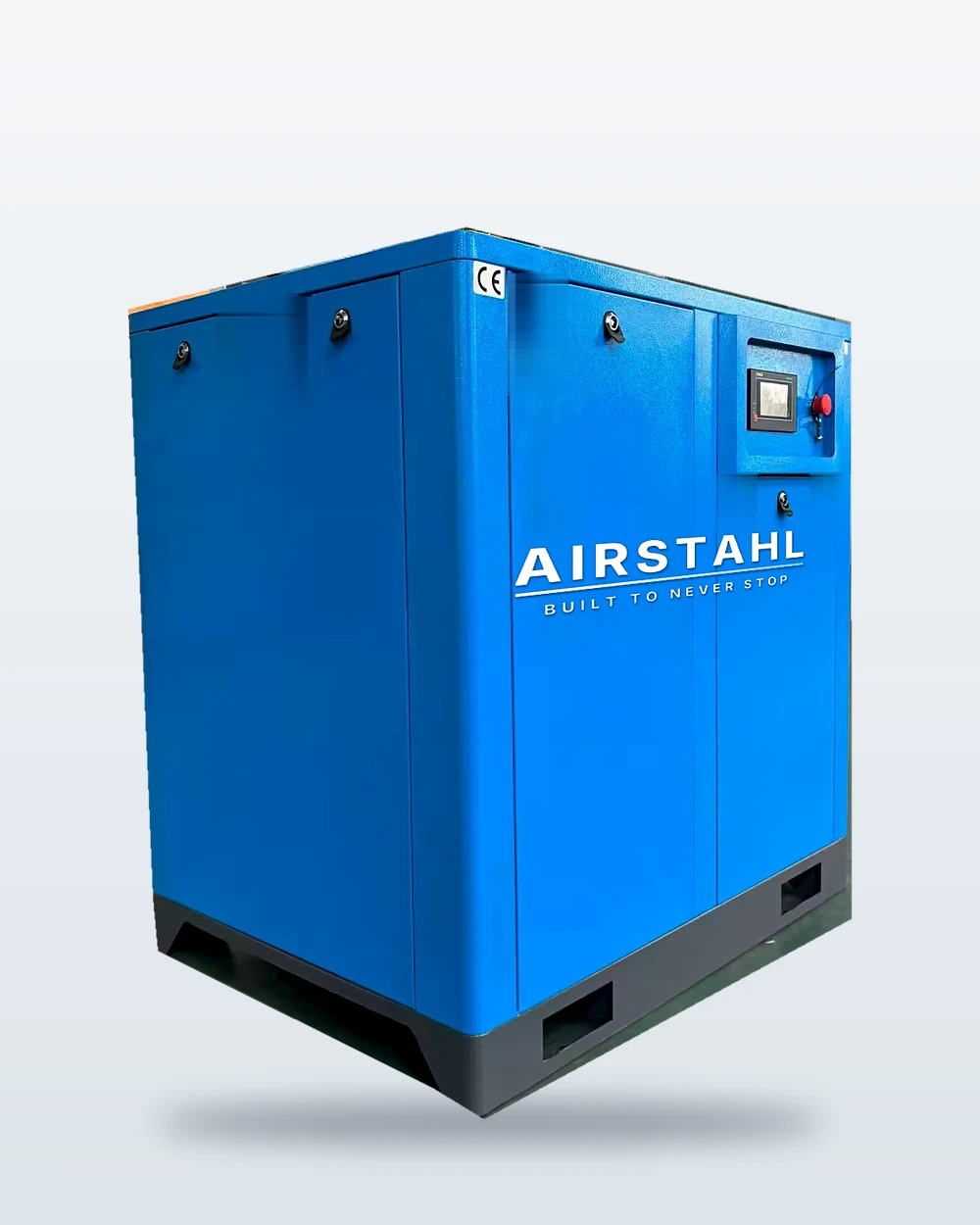 15kW
S 150Screw compressor 15 kW
For production workshops and truck workshops with high air consumption.
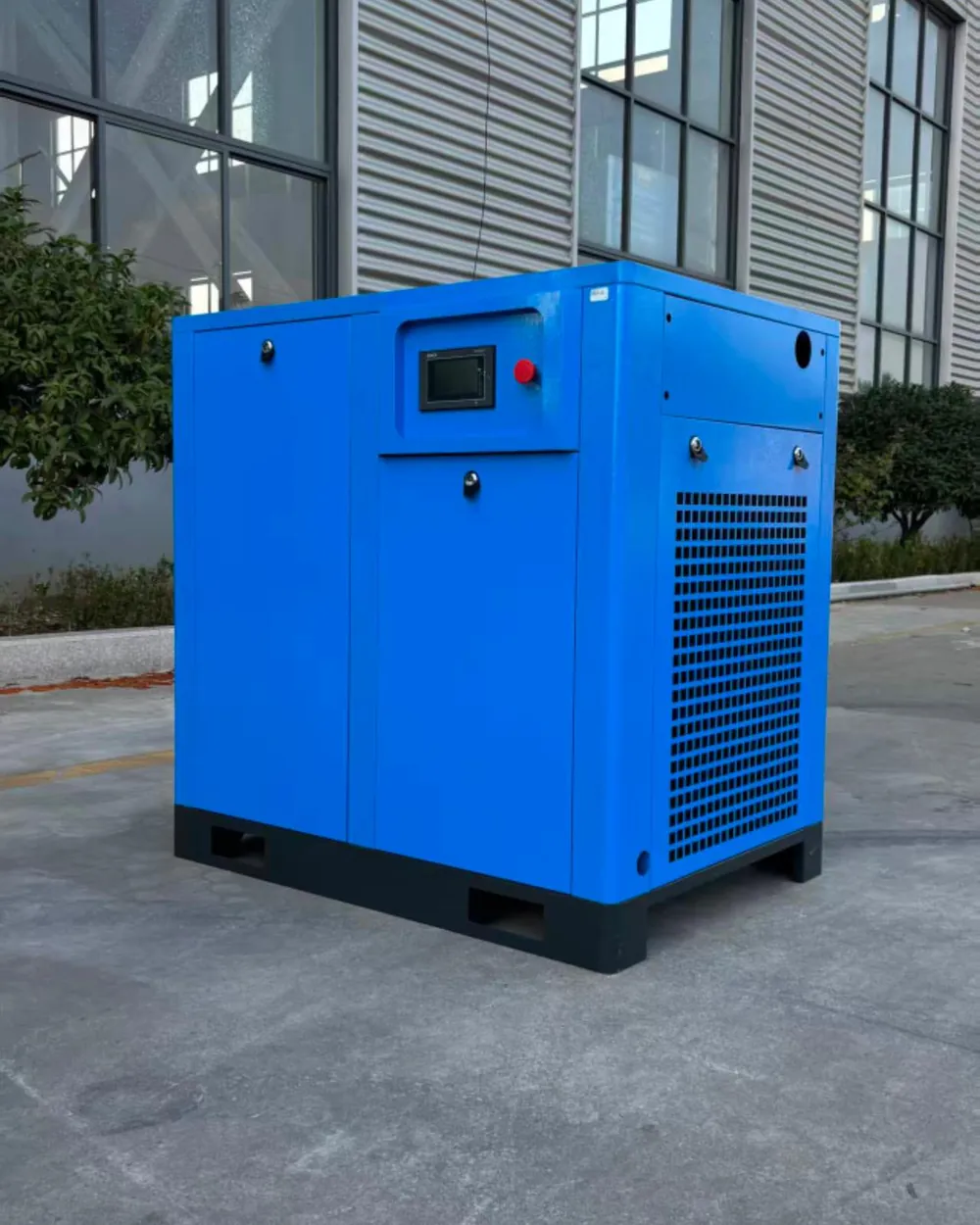 22kW
S 220 PMScrew compressor 22 kW permanent magnet
Permanent magnet motor, 10 bar: the industrial machine of the range.
Other trades
A project, a question?
We answer quickly and quotes are free. Tell us what you run on air and we'll point you to the right model.