Powder coating
Compressor for powder coating
Screw compressor for powder coating: electrostatic guns, powder fluidising, booth filter cleaning. Dry, filtered air from the K 4-in-1 and the S series.
In a powder coating shop, compressed air does its work between pretreatment and the curing oven. It fluidises the powder in the hopper or box feeder, carries it to the electrostatic gun through the injector, shapes the cloud at the nozzle and purges the electrode. It also blows parts clean before coating, pulses the booth's cartridge filters and runs the powder centre. Powder hates moisture: wet or dirty air means clumps, spitting at the gun and defects you only see when the parts come out of the oven.
How much air does a powder coating line need?
Add up everything that runs at the same time. The figures below are indicative only: use the values in your gun and booth manuals first.
- Manual electrostatic gun, including conveying, dosing and electrode air plus fluidising: around 80 to 150 l/min.
- Booth cartridge cleaning by reverse air pulses: it depends on the number of cartridges and the pulse rate, often 100 to 200 l/min on average.
- Blow gun for part preparation: about 200 l/min while in use.
Example of a typical shop, one manual booth with two guns and a blow gun:
- 2 guns × 120 l/min = 240 l/min
- booth filter cleaning: 150 l/min
- blow gun: 200 l/min × 50 % use = 100 l/min
- total: 490 l/min, plus a 25 % margin for leaks and future needs, so about 610 l/min.
An automatic line is another scale: twelve guns at 120 l/min already make 1,440 l/min, before filter cleaning, the powder centre and blow-off. On pressure, most powder equipment needs a supply of around 6 bar: check the figure in the manual. A compressor set to 8 bar leaves headroom for losses across the dryer, filters and pipework. Our flow and pressure converter switches between l/min and m³/min.
Which compressor for powder coating?
- One manual booth: the K 75. It delivers 1.1 m³/min at 8 bar, or 1,100 l/min, with a 420 L receiver, a refrigerated dryer and filtration on one frame. For the typical shop above, it keeps spare capacity for a third gun or a touch-up booth.
- Several booths or a small line: the K 110 or K 150. They deliver 1.7 and 2.2 m³/min at 8 bar, again as 4-in-1 units with a 340 L receiver, dryer and filtration. The K 150 keeps up with around ten guns at 120 l/min plus their booth.
- An automatic line running shifts: the S series. The S 150 (2.2 m³/min at 8 bar) or the S 220 PM (3.6 m³/min at 8 bar) are standalone units, paired with a dryer, a receiver and fine filters sized for the line. They run at variable speed, so output follows the number of guns in use. See variable speed or fixed speed. Above 22 kW, the S series goes up to 132 kW on request.
What air quality does powder coating need?
The ISO 8573-1 standard grades compressed air with three numbers: particles, water, oil. In powder coating, all three matter.
- Water. This is powder's main enemy. It makes powder clump in the hopper, upsets fluidising and electrostatic charging, and blocks injectors. A refrigerated dryer brings the pressure dew point down to a few degrees above zero. If the pipework runs through a cold area, or your equipment maker asks for a sub-zero dew point, a desiccant dryer goes further.
- Oil. Our screw compressors are oil-lubricated, so the air leaves the compressor with traces of oil. On a coated part, an oil aerosol shows up after curing as craters. Fine filters in series hold it back, with an activated carbon filter for vapours where needed.
- Particles. Dust drawn in at the intake and rust from the pipework are stopped by a general filter, then a fine filter, ahead of the coating equipment.
The air class to aim for depends on your guns, your powder and the finish you need. Our technicians define it with you to ISO 8573-1, then size the dryer and filters. Our article on compressed air fine filters explains the filter sequence.
Installation and maintenance
- Keep the compressor out of the coating area. Fine airborne powder clogs the intake filter quickly. A separate, ventilated room that stays frost-free for the dryer is the right answer. See installing a compressor room.
- Drain the condensate. The receiver, dryer and filters all collect water. An automatic condensate drain clears it before it gets back into the network. See water in compressed air.
- Change filter elements on time. A saturated filter lets oil and water through and costs the guns pressure.
- Watch the hours. First service at 500 hours, then every 1,500 hours, with a reminder on the controller. Our service kits group the air filter, oil filter and air/oil separator for each model.
AIRSTAHL compressors come with a 2-year warranty and spare parts available for 15 years. Servicing is carried out by our technicians and partner dealers.
To price your installation, start with the configurator, estimate the energy bill with the electricity cost calculator, then describe your line (guns, booths, shifts) in a quote request.
Frequently asked questions — Powder coating
How much air does an electrostatic powder gun need?
As an indication, allow 80 to 150 l/min per manual gun, including conveying air and fluidising. Add booth filter cleaning and blow guns, then a margin of about 25 %. The exact figure is in the gun's manual.
Why does powder coating need dry air?
Powder hates moisture: it clumps, fluidises poorly, charges less well and blocks injectors. A refrigerated dryer is enough in most shops. A desiccant dryer gives a sub-zero dew point when the equipment maker asks for it or when the pipework runs through a cold area.
Is an oil-lubricated screw compressor suitable for powder coating?
Yes, provided the air is treated. Our screw compressors are oil-lubricated and the air leaves them with traces of oil: fine filters in series, with an activated carbon filter where needed, hold them back before the guns. Our technicians define the target air class with you to ISO 8573-1.
Which AIRSTAHL compressor for a manual powder booth?
The K 75 4-in-1 delivers 1.1 m³/min at 8 bar, with a 420 L receiver, a refrigerated dryer and filtration on one frame. It covers a booth with two or three guns plus a blow gun. For several booths, move up to the K 110 or K 150.
What pressure does a powder coating installation need?
Most powder equipment needs a supply of around 6 bar: check the manual. A compressor set to 8 bar covers this with headroom for losses across the dryer, filters and pipework. There is no point setting it higher: every extra bar costs electricity.
How much air does an automatic powder coating line with 12 guns need?
As a guide, 2.3 to 3.5 m³/min including margin, depending on the guns, the booth and the powder centre. For a typical line around 3 m³/min, the S 220 PM, a 22 kW screw compressor delivering 3.6 m³/min at 8 bar, keeps up with the line, together with an air receiver, a dryer and fine filters. The station-by-station calculation is in our article on the 12-gun powder coating line.
How can I check that there is no oil in the powder coating air?
Do the white cloth test: blow for about thirty seconds onto a clean white cloth held a few centimetres away, at the compressor outlet, after the dryer and filters, then at the coating station. If the cloth stays clean after the filters but marks at the station, look at the network: an undrained low point, dirty pipes. If it marks right after the filters, filtration is missing, undersized or saturated.
The curing oven heats the workshop: how do I protect the compressor?
Keep the compressor away from the oven, duct its hot air outside through a short duct with few bends, and provide a fresh air inlet low down in the room. Choose a larger dryer as well: our configurator increases its capacity by 20 % when the room goes above 25 °C in summer, and by 40 % above 35 °C. Otherwise the machine runs hot and ends up tripping its safety cut-out in the middle of production.
The recommended models
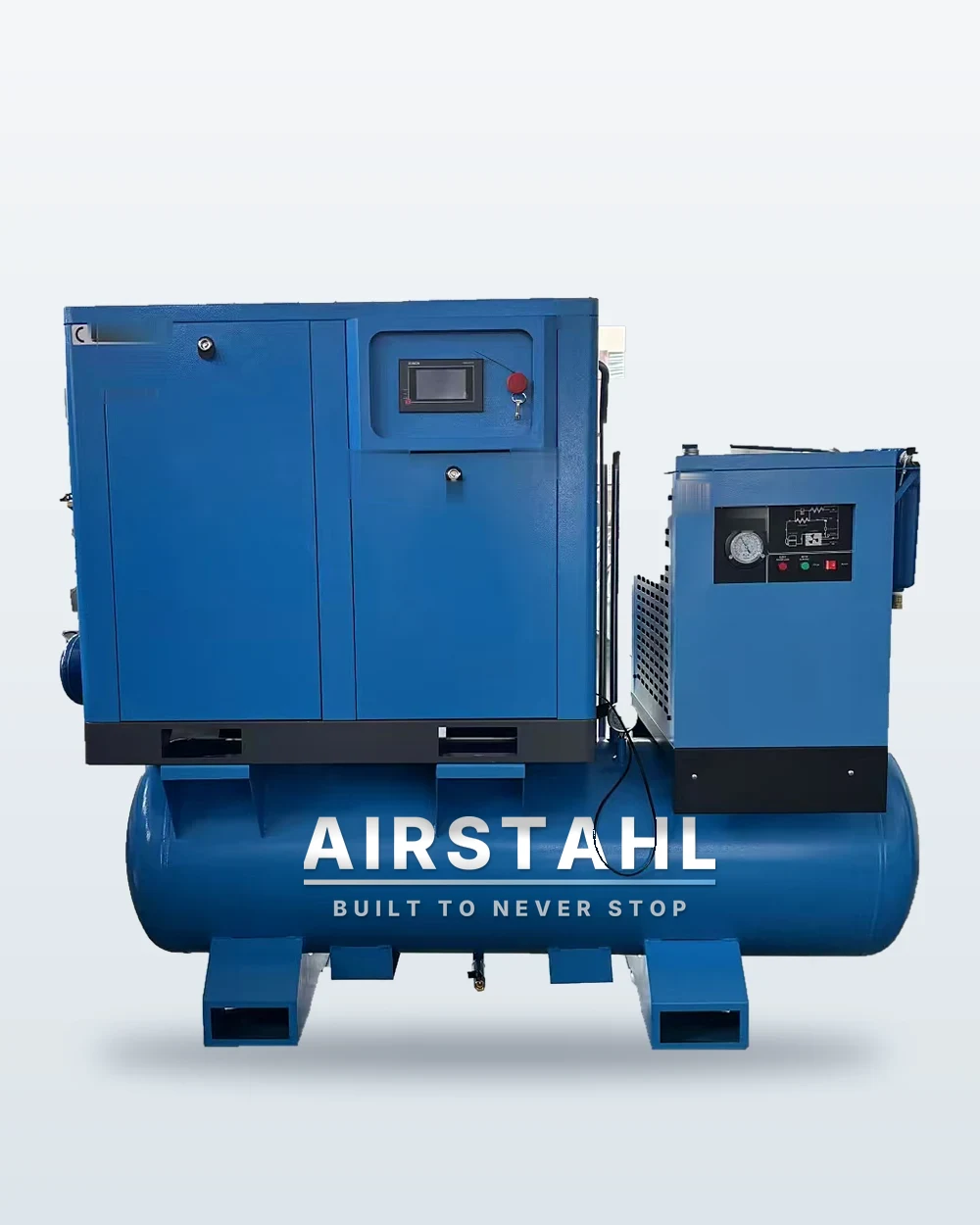 7.5kW
K 75Screw compressor 7.5 kW 4-in-1
Compressor, 420 L air receiver, refrigerated dryer and filtration combined on a single frame.
11kW
K 110Screw compressor 11 kW 4-in-1
Compressor, air receiver, refrigerated dryer and filtration combined on a single frame, at 11 kW.
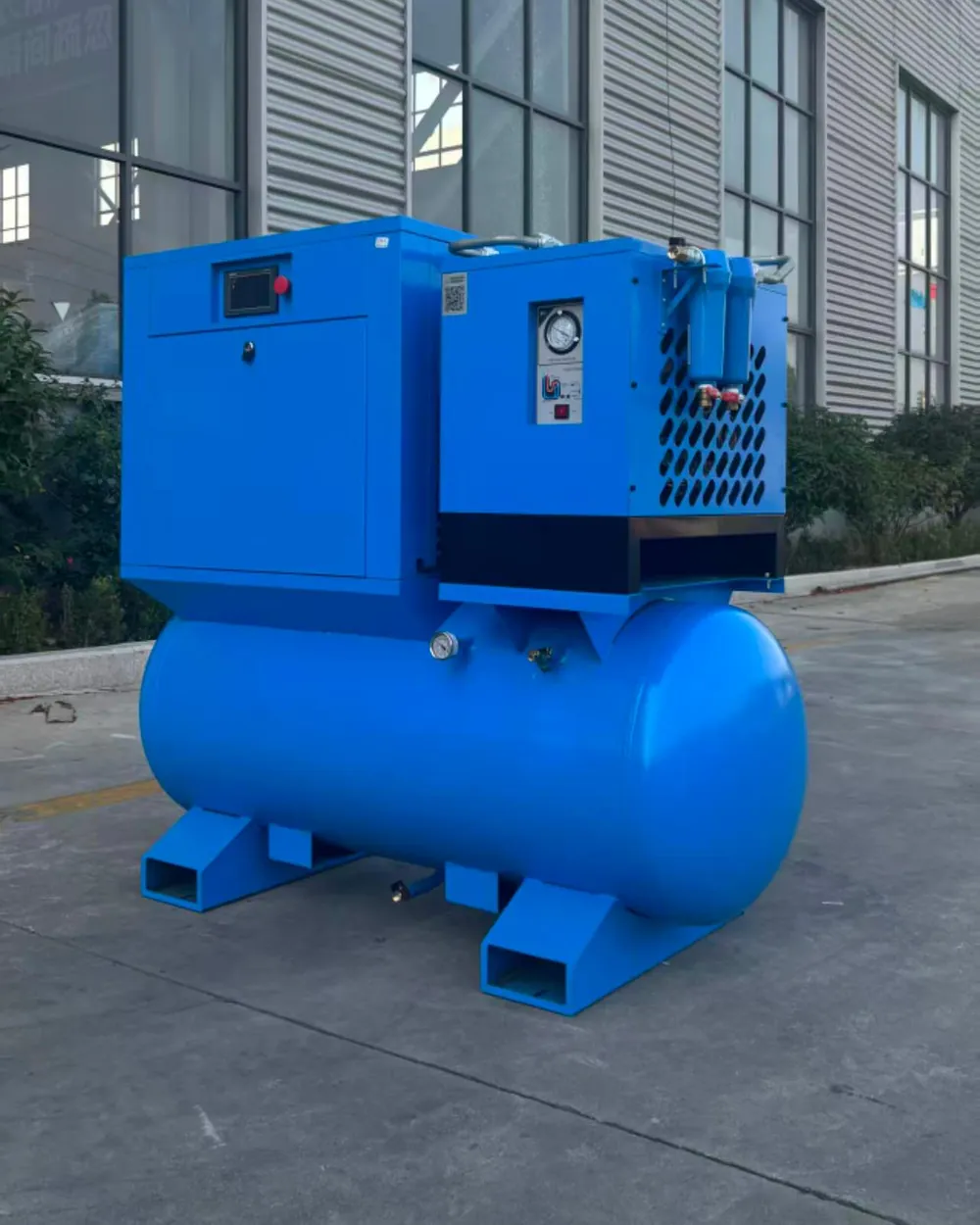 15kW
K 150Screw compressor 15 kW 4-in-1
Compressor, air receiver, refrigerated dryer and filtration combined on a single frame, at 15 kW.
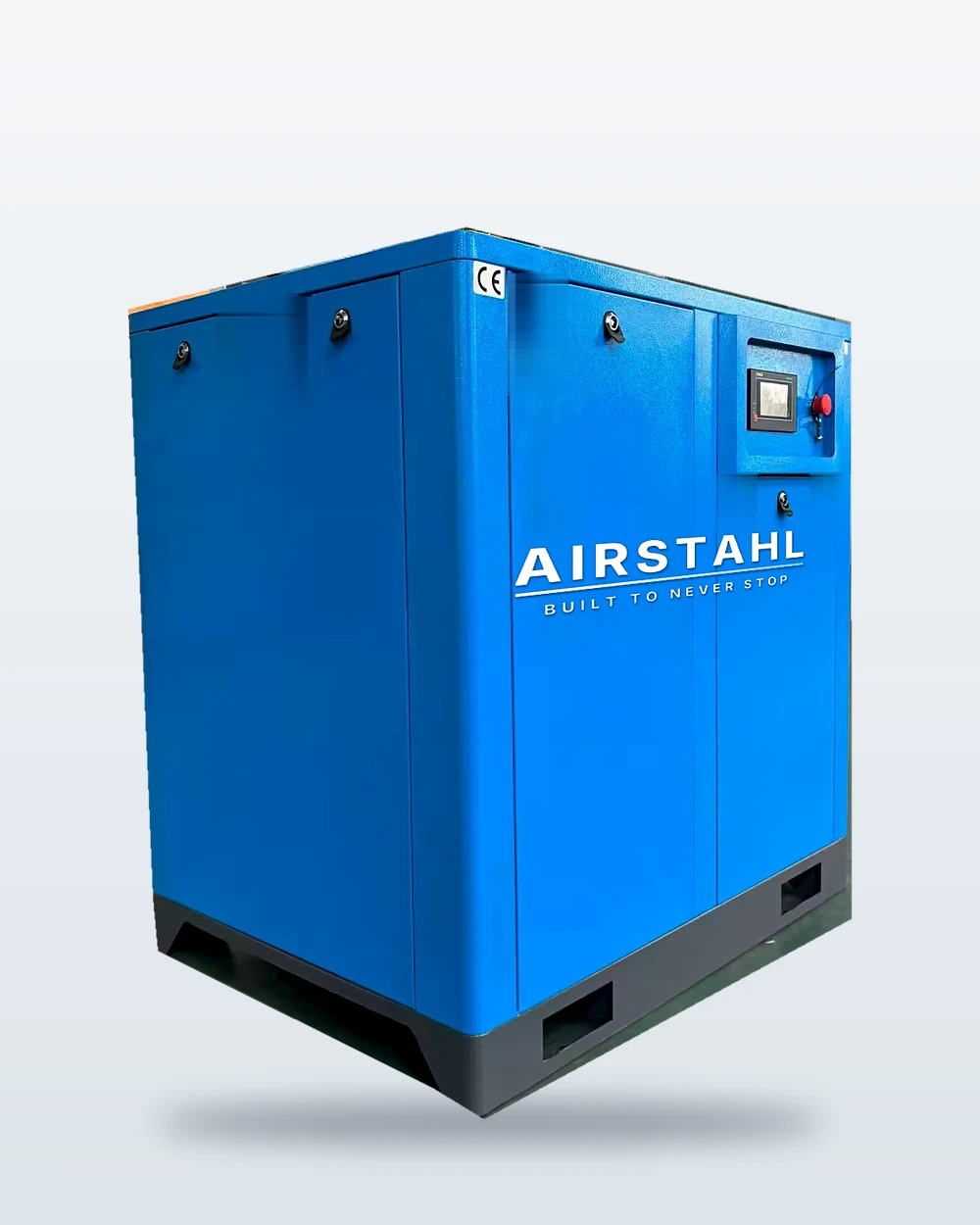 15kW
S 150Screw compressor 15 kW
For production workshops and truck workshops with high air consumption.
Other trades
A project, a question?
We answer quickly and quotes are free. Tell us what you run on air and we'll point you to the right model.