Brewery and cidery
Compressor for breweries and cideries
4-in-1 screw compressor for craft breweries and cideries, for bottling, keg washing, valves and presses. Dry, filtered air from the 7.5 to 15 kW K series.
In a microbrewery, a craft brewery or a cidery, compressed air keeps packaging running. It operates the pneumatic valves on the tanks and in the brewhouse, and the cylinders of the filler, the capper and the can seamer. It blows rinse water out of kegs in the keg washer, drives the filter controls and blows out bottles before filling. In a cidery, it also inflates the membrane of the pneumatic press during apple season.
How much air does a brewery need?
Work out the demand from your machine data sheets: each manufacturer gives the air consumption in l/min and the working pressure. Add up the machines that run at the same time, then add a 25 % margin, as our configurator does.
Example of a microbrewery that bottles and fills kegs on the same day (indicative values, replace them with the figures from your data sheets):
- semi-automatic filler and capper: 300 l/min
- keg washer and filler: 200 l/min
- pneumatic valves and filter controls: 50 l/min
- one blow gun: 150 l/min
- total: 700 l/min, or 875 l/min with a 25 % margin
The K 75 delivers 1.1 m³/min at 8 bar, or 1,100 l/min. It covers this demand and leaves room for one more machine. Our flow and pressure converter handles the conversion if your data sheets use other units.
Which compressor for a brewery or cidery?
The K series puts a variable speed screw compressor, an air receiver, a refrigerated dryer and filtration on one frame. One machine to install, with air that is already dried and filtered at the outlet.
- Microbrewery or small cidery: the K 75, 7.5 kW, 420 L air receiver, 66 ± 2 dB(A). The large receiver absorbs the peaks from the keg washer, and the noise level stays acceptable if the compressor sits close to the brewhouse.
- Craft brewery with a faster canning or bottling line: the K 110, 11 kW, 1.7 m³/min at 8 bar, 340 L air receiver.
- Brewery packaging all day, or a cidery pressing and bottling at the same time: the K 150, 15 kW, 2.2 m³/min at 8 bar.
In a cidery, the press only runs a few weeks a year. Size the compressor for the rest of the year and top it up during the season with compressor rental: screw compressors from 5.5 to 132 kW.
What air quality for a brewery?
Our compressors are oil-lubricated. Air leaving the screw element contains water, particles and traces of oil. The K series dryer and filtration remove most of it, but the quality you need depends on what the air touches:
- Valves, cylinders, controls: K series air is suitable as it is.
- Blowing out empty bottles and cans, purging kegs: the air touches the inside of the container. Add fine filters at the point of use.
- Contact with wort, beer or cider, for example wort aeration before fermentation: this is the most demanding case. Point-of-use filtration is defined with the manufacturer of your equipment.
For each point of use, set the target air class according to ISO 8573-1 with our technicians and, where relevant, with your customers' specifications. Our ISO 8573-1 air quality guide explains how to read these classes.
Bear in mind that air is not a transfer gas. To push beer or counter-pressure a tank, breweries use CO2 or nitrogen, because the oxygen in air damages the product. The compressor feeds the machines, not the finished product.
Installation and maintenance
- A dry room. A brewery washes a lot: wet floors, cleaning in place, steam from the brewhouse. Install the compressor away from wash-down areas, in a dry, ventilated, frost-free room. Our article on the compressor room gives the rules.
- Away from heat. Do not place the compressor next to the boiler or the brew kettle: hot intake air makes the dryer work harder.
- Condensate. It contains oil, so do not send it down the drain with the wash water. Collect it and have it treated. An automatic drain avoids missed drains.
- Maintenance. First service at 500 hours, then every 1,500 hours, with a reminder on the controller. Also replace the line filter elements: a saturated filter no longer protects anything. Service kits group the parts for each model. In a cidery, service the compressor before pressing season, not during it. 2-year warranty, parts available for 15 years.
To choose your model, start with the configurator, estimate power consumption with our calculator, then request a quote with a list of your machines.
Frequently asked questions — Brewery and cidery
Which compressor for a microbrewery?
For a microbrewery that bottles and fills its own kegs, the K 75 is a good starting point: 1.1 m³/min at 8 bar, a 420 L air receiver, a refrigerated dryer and filtration on one frame. The K 110 (1.7 m³/min) and K 150 (2.2 m³/min) take over for a faster canning or bottling line. Add up your machines' consumption and allow a 25 % margin to choose.
Can compressor air be used in contact with beer or cider?
Our compressors are oil-lubricated: before treatment, the air contains water, particles and traces of oil. The K series dries and filters it, which is enough for valves and cylinders. As soon as the air touches the container or the product, add fine filters at the point of use and define the air class according to ISO 8573-1 with our technicians.
Can compressed air replace CO2 for pushing beer?
No. Oxygen in the air damages beer: for racking, transfers and counter-pressure, breweries use CO2 or nitrogen. The compressor feeds the machines (valves, filler, keg washer, filter), not the finished product.
Which compressor for a pneumatic press in a cidery?
Air consumption depends on the press: take it from the data sheet and add it to the bottling line if both run at the same time. The K series covers 1.1 to 2.2 m³/min at 8 bar. Since the press only works a few weeks a year, compressor rental can top up your machine during the season.
Where should the compressor go in a brewery?
In a dry, ventilated, frost-free room, away from wash-down areas and from the boiler or brew kettle. Condensate contains oil: do not send it down the drain with the wash water, collect it and have it treated. Leave access for servicing at 500 hours and then every 1,500 hours.
Which compressor for a keg washer-filler?
For a semi-automatic washer with one or two heads, the K 75, a 7.5 kW 4-in-1 screw compressor, is enough in most breweries: it delivers 1.1 m³/min at 8 bar and its 420 L air receiver absorbs the peaks of the purge cycles. An automatic multi-head washer, or one that runs at the same time as bottling, calls for a K 110 instead. See our article on the compressor for a keg washer.
Which ISO 8573-1 class for blowing out bottles and cans?
There is no single class: it is set with the maker of your rinser or filler and, where relevant, with your customers' specifications. In practice, air that touches the inside of a container needs to be dried, then passed through fine filters at the point of use, with particular attention to oil. Our technicians help you set the class and the filtration station by station.
How much electricity does a microbrewery compressor use?
The basic calculation is power × operating hours per year × price per kWh. To compare machines, bring it down to the m³: a 7.5 kW unit delivering 1.1 m³/min produces 66 m³ per hour, about 0.11 kWh per m³ on load. The K 75 has variable speed: when bottling stops, it slows down instead of running idle. The electricity cost calculator on the site gives an order of magnitude for your hours.
The recommended models
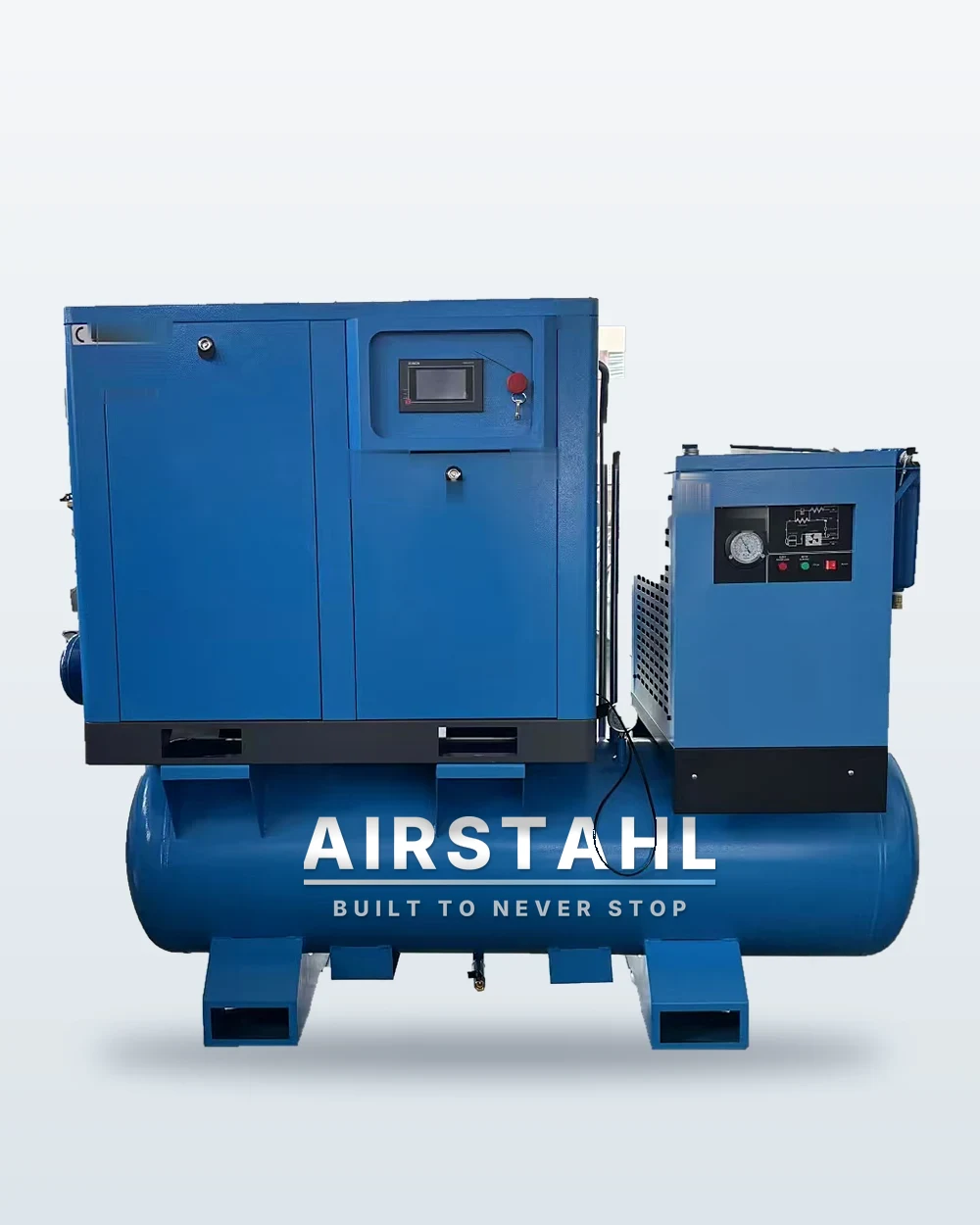 7.5kW
K 75Screw compressor 7.5 kW 4-in-1
Compressor, 420 L air receiver, refrigerated dryer and filtration combined on a single frame.
11kW
K 110Screw compressor 11 kW 4-in-1
Compressor, air receiver, refrigerated dryer and filtration combined on a single frame, at 11 kW.
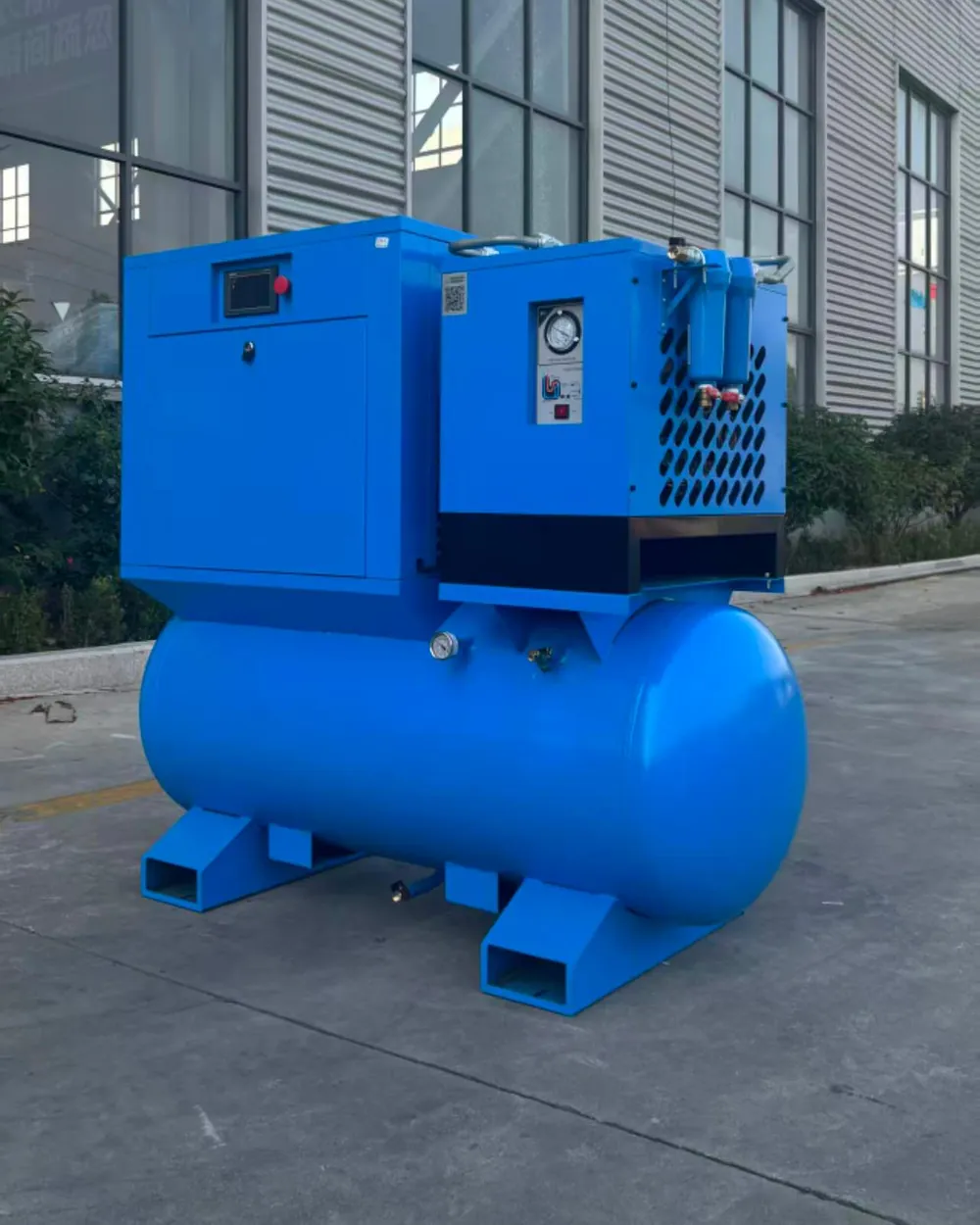 15kW
K 150Screw compressor 15 kW 4-in-1
Compressor, air receiver, refrigerated dryer and filtration combined on a single frame, at 15 kW.
Other trades
A project, a question?
We answer quickly and quotes are free. Tell us what you run on air and we'll point you to the right model.