Agricultural machinery
Compressor for agricultural machinery workshops
Air compressor for tractor dealers and farm machinery repair shops: large tyre inflation, 1" impact wrenches, blow-off, painting. E 75 HP, S 55 or K 75.
At a tractor dealer or a farm machinery repair shop, compressed air does a bit of everything. It takes tractor wheels off with a 1" impact wrench, inflates and seats large tyres, blows dust and chaff out of radiators, filters and cabs, drives the grease pump, and supplies the spray gun when a machine or a part is repainted before it goes back to the customer. The work follows the seasons: quiet for part of the year, flat out before drilling and harvest.
How much air does a farm machinery workshop need?
Start from the tools that run at the same time during the busiest hours. The figures below are typical consumptions, as a guide only. Check them on your tools' data sheets.
- 1" impact wrench: around 600 l/min.
- 1/2" impact wrench: around 300 l/min.
- Large tyre inflator, blow gun, grease pump: around 150 l/min each.
- Spray gun: around 350 l/min, continuously while painting.
Impact wrenches, tyre inflation and blow guns work in bursts. Thanks to the air receiver, count them at 50 %. Example for a workshop with three mechanics: one 1" impact wrench (300 l/min), one 1/2" impact wrench (150 l/min) and one blow gun (75 l/min) at the same time, about 525 l/min. With a 25 % margin, aim for 650 l/min. If a paint station runs at the same time, add 350 l/min.
An agricultural tyre runs at low pressure, but its volume is huge. What matters is the reserve of air in the receiver and how fast the compressor can refill it. Seating the bead of a large tyre also calls for higher pressure at the moment the bead snaps into place.
Which compressor for a tractor workshop?
- Repair shop with intermittent use: the E 75 HP. Two-stage piston compressor, 12.5 bar, 1.05 m³/min, on a 300 L receiver with wheels. The pressure and reserve you need for heavy impact wrenches and large tyres. It is the right choice when air is used hard for a while, then rests.
- Small workshop where air runs all day: the S 55. 5.5 kW screw compressor, 0.6 m³/min at 8 bar, compact (98 kg). It is built for continuous running: blow-off, greasing, 1/2" tools. It comes without receiver or dryer, so add a receiver to provide the reserve for tyre inflation.
- Dealer with a workshop and a paint station: the K 75. 7.5 kW 4-in-1 screw compressor: 420 L receiver, refrigerated dryer and filtration on a single frame. 1.1 m³/min at 8 bar, 0.95 m³/min at 10 bar, 0.8 m³/min at 13 bar. It covers the example workshop above plus a paint station, with air that is already dry.
For a farm that repairs its own equipment, see our agricultural compressor page instead. If your workshop also services trucks and plant on several bays, the truck workshop page presents the 11 to 22 kW models.
What air quality for farm machinery repair?
For impact wrenches and tyre inflation, air without water is enough. Water damages tools, rusts the pipework and freezes in winter in a poorly heated workshop. For painting, the air must be dry and filtered, or you get craters and poor adhesion on the panels.
The K 75 already includes the dryer and filtration. With the E 75 HP or the S 55, add a refrigerated dryer and fine filters ahead of the paint station. Our compressors are oil-lubricated: the air class for your paint station is defined with our technicians, according to ISO 8573-1.
Installation and maintenance
Keep the compressor away from the dust in the workshop: blowing out combines and radiators fills the air with chaff and fine soil. A separate, ventilated room protects the intake filter. In a cold workshop, protect the machine from frost.
- Draining. On a piston compressor receiver, drain every day, or fit an automatic drain. Our article on water in compressed air explains why.
- Piston compressor. Oil, filter and belt need regular checks: see our piston compressor maintenance schedule.
- Screw compressor. First service at 500 hours, then every 1,500 hours, with a reminder shown on the controller. Our service kits group the parts for each model.
Service before the season, not during it. For a peak in activity, screw compressor hire from 5.5 to 132 kW can back up your installation. 2-year warranty, parts available for 15 years.
List your tools in the configurator, size your reserve with the air receiver calculator, or describe your workshop to request a quote.
Frequently asked questions — Agricultural machinery
Which compressor for a tractor repair workshop?
For intermittent use, the E 75 HP (two-stage piston, 12.5 bar, 1.05 m³/min, 300 L receiver) brings the pressure and reserve for 1" impact wrenches and large tyres. If air runs all day, the S 55 screw compressor is a better fit, with a separate receiver. A dealer with a paint station chooses the K 75, which includes a 420 L receiver, dryer and filtration.
Do I need a high-pressure compressor to inflate tractor tyres?
An agricultural tyre runs at low pressure, but its volume is very large: what counts is the air reserve and the flow rate. Seating the bead of a large tyre, on the other hand, calls for pressure at the moment the bead snaps into place. The E 75 HP, at 12.5 bar on a 300 L receiver, covers both needs.
How much air does a 1" impact wrench use?
Around 600 l/min as a guide; check it on the tool's data sheet. Because it works in bursts, it is counted at 50 % thanks to the air receiver. Add up the tools used at the same time during busy hours and add a 25 % margin to size the compressor.
Piston or screw compressor for a farm machinery dealer?
A piston compressor suits work where air is used hard for a while, then rests, which is the case in most repair shops. A screw compressor is built for continuous running, when several mechanics use air all day or a paint station is in use. The configurator on our site helps you decide from your list of tools.
Can I repaint farm machinery with the same compressor?
Yes, as long as the air is dry and filtered at the paint station. The K 75 already includes a refrigerated dryer and filtration. With the E 75 HP or S 55, add a dryer and fine filters; the air class is defined with our technicians according to ISO 8573-1.
My 1" impact wrench lacks power: is the compressor too small?
Not necessarily. The most common cause is the hose or the coupling: too narrow, too long, quick coupling too small, and the pressure drops at the tool even with a large compressor. Measure the pressure at the wrench inlet while it is undoing a nut: it needs 6.3 bar or the value in the manual. Also check the receiver drain and, on a piston compressor, the belt and the filter. See our article on the compressor for a 1-inch impact wrench.
Why does my piston compressor no longer build up pressure?
Most of the time the cause is simple. First look for leaks, compare the tools' consumption with the compressor flow, clean the air filter and check the setting. On a piston unit, then look at the belt, which slips when it is slack, the valves, if air comes back out through the intake filter, and worn piston rings, which make the machine run hot and use oil.
Is a 230 V compressor enough for a farm machinery workshop?
Rarely. Single-phase is fine up to about 2.2 kW, for tyre inflation and a blow gun. A 1" impact wrench needs around 600 l/min, meaning a compressor of about 1 m³/min, and from 4 kW compressors are three-phase in the vast majority of cases. The E 75 HP, S 55 and K 75 all connect to three-phase: have an electrician check the dedicated line and the available power.
The recommended models
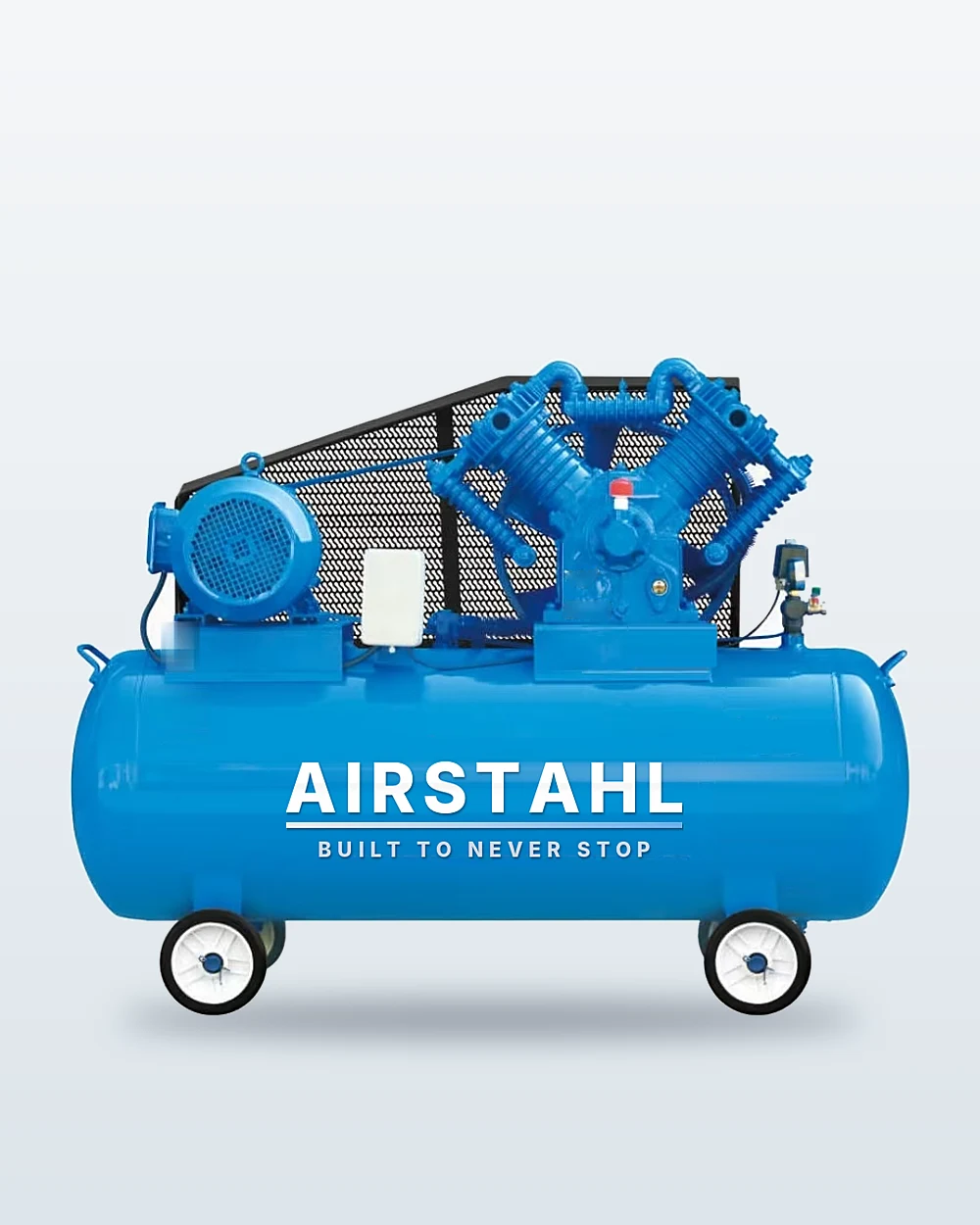 7.5kW
E 75 HPTwo-stage piston compressor 7.5 kW, 12.5 bar
High pressure for truck tyres and demanding tools.
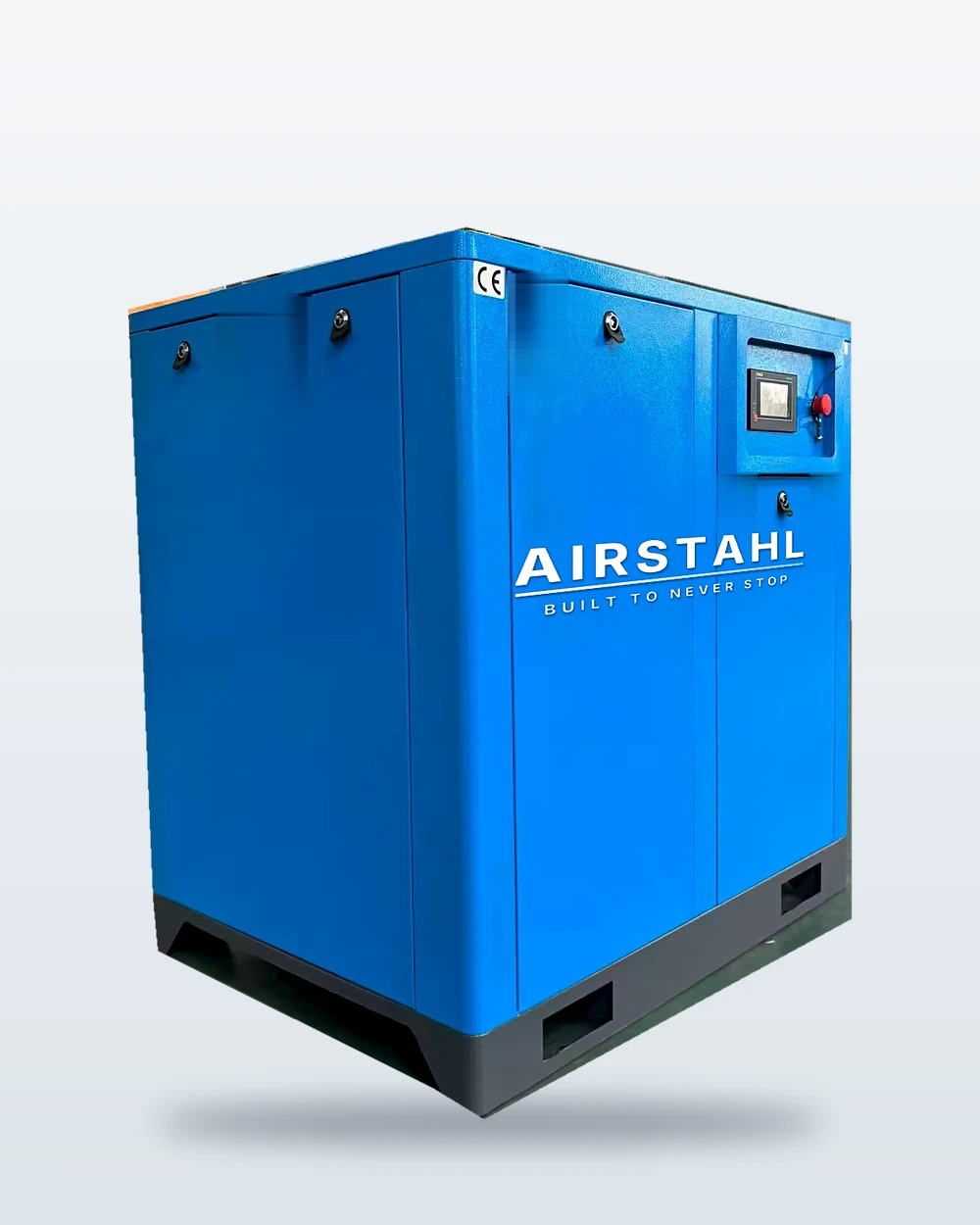 5.5kW
S 55Screw compressor 5.5 kW
The entry-level screw compressor for workshops that run all day long.
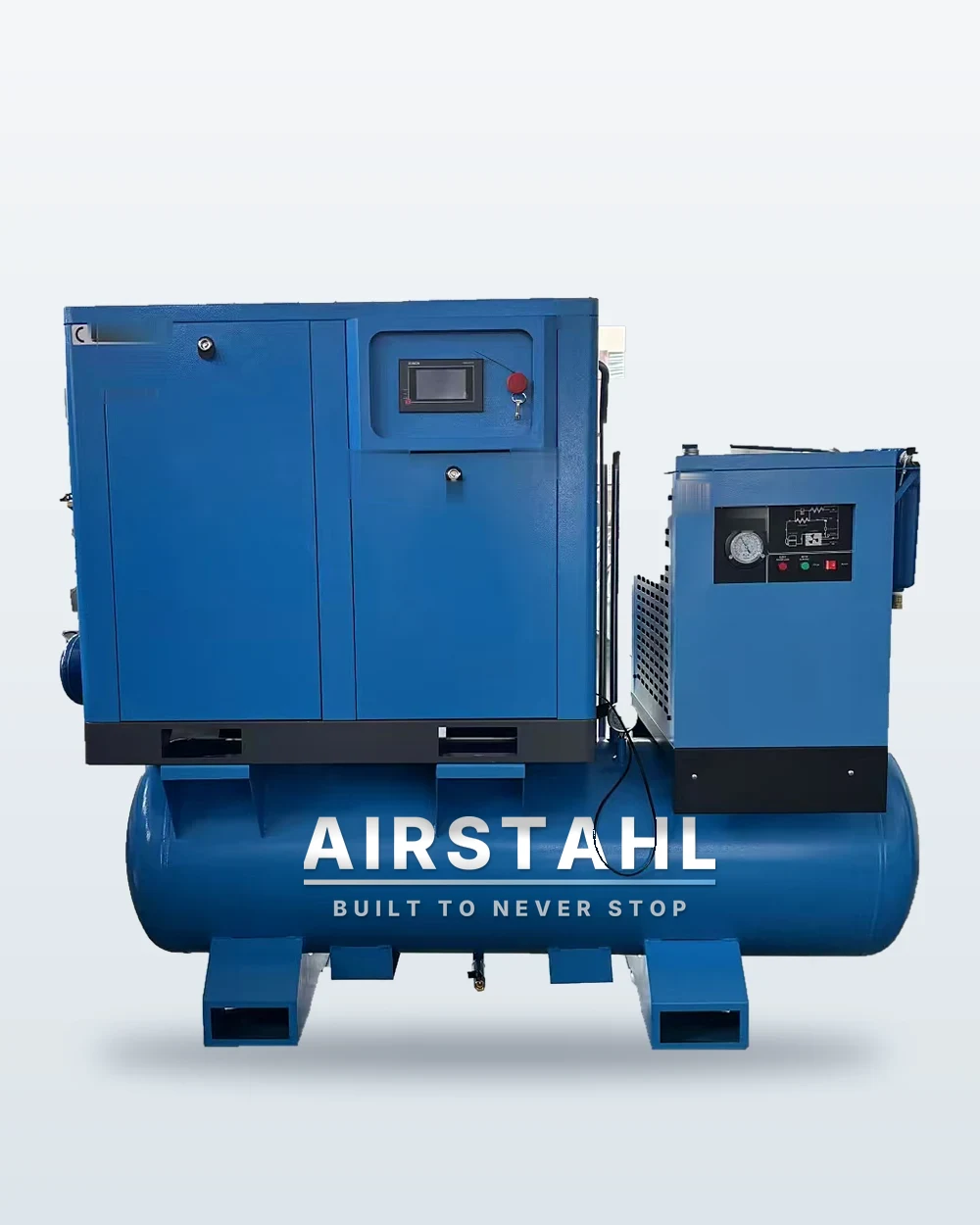 7.5kW
K 75Screw compressor 7.5 kW 4-in-1
Compressor, 420 L air receiver, refrigerated dryer and filtration combined on a single frame.
Other trades
A project, a question?
We answer quickly and quotes are free. Tell us what you run on air and we'll point you to the right model.