Boatyard and marine industry
Compressor for boatyards and marinas
Screw compressor for boatyards, shipyards and marinas - hull sanding, blasting and painting, air tools. Dry air, 4-in-1 or mobile version, hire available.
On the hard standing or in a repair yard, compressed air prepares and finishes the hulls. It powers the sanders that strip antifouling and key the gelcoat, the blasters that take steel or GRP back to bare substrate, the paint and varnish spray guns, the grinders, drills and riveters, and the blow gun that removes dust before every coat. In a marina it also runs the engine workshop and inflation. All of this happens in damp, salty air, often outdoors, and the compressor has to be chosen and installed with that in mind.
How much air does a boatyard need?
List the tools that run together, multiply by their air consumption and by the share of time they are really in use, then add a margin. The figures below are indicative, typical orders of magnitude. Each tool's data sheet takes precedence.
- Pneumatic orbital sander: 350 to 450 L/min.
- Paint spray gun: 200 to 400 L/min depending on the model.
- Blow gun: 200 to 300 L/min while it is blowing.
- 1/2" impact wrench: about 300 L/min.
- Abrasive blasting: at 7 bar, roughly 3,000 L/min for a 6 mm nozzle and over 4,000 L/min for an 8 mm nozzle. A worn nozzle uses more.
Example: a repair yard with two boats hauled out. Two sanders at 400 L/min, in use three quarters of the time: 600 L/min. One spray gun at 300 L/min, used half the time: 150 L/min. A blow gun at 250 L/min, half the time: 125 L/min. Total: 875 L/min. With a 25% margin for leaks, tool wear and an extra workstation: about 1,100 L/min. A compressor delivering 1.7 m³/min at 8 bar covers it with reserve. Our flow and pressure converter switches between L/min and m³/min.
Blasting is calculated separately: it draws air continuously, and the hose costs pressure.
Which compressor for a boatyard or marina?
Marina workshop or small yard: the K series 4-in-1
The K series puts the screw compressor, receiver, refrigerated dryer and filtration on a single frame, so the air reaches sanders and spray guns already dry. The K 75 (1.1 m³/min at 8 bar, 420 L receiver) handles one or two workstations. The K 110 (1.7 m³/min at 8 bar, 340 L receiver) covers the example above.
Hard standing: the mobile M series
The M series are electric screw compressors mounted on a receiver and wheels, so they can be moved to the boat. The M 75 delivers 1.0 m³/min at 10 bar with a 180 L receiver. The M 220 delivers 2.0 m³/min at 12.5 bar with twin receivers, 180 L in total. Both need a 380 V three-phase supply. For painting or blasting, add a dryer at the outlet.
Yard with blasting and several crews: the S series
A standalone S series compressor is installed in a plant room with its receiver and dryer. The S 220 PM delivers 3.8 m³/min at 7 bar, enough for a 6 mm nozzle. An 8 mm nozzle or several blasters need more, and the S series goes up to 132 kW on request. For gentler stripping, see our page on compressors for soft blasting and our article soft blasting vs sandblasting.
Large job or launch season: hire
For a full hull blast or the spring rush, compressor hire, from 5.5 to 132 kW, maintenance included and with no long-term commitment, covers the need for as long as the job lasts.
What air quality for hull painting and blasting?
- Water. Sea air is loaded with moisture and the compressor concentrates it. In paint it causes adhesion faults and blistering. In blasting, damp abrasive clogs and freshly blasted steel flash-rusts. A refrigerated dryer is essential: see which air dryer to choose.
- Oil. Our compressors are oil-lubricated. For painting, add fine filters at the workstation and define the air class with our technicians using our guide to ISO 8573-1.
- Salt and dust. Salt, sanding dust and abrasive clog the compressor's intake filter and cooler.
Installation and maintenance by the sea
- Under cover. A closed, ventilated room, protected from rain and spray, with the air intake on the landward side and well away from the blasting area. A mobile compressor goes back under cover every evening.
- Condensate draining. In salty air, water builds up fast: an automatic condensate drain empties the receiver reliably. Condensate contains oil, so never let it run into the harbour or the storm drains; have it treated. See our article on condensate draining.
- The receiver. Without a dryer upstream, or in a damp room, a galvanised receiver resists corrosion better.
- Servicing. First service at 500 hours, then every 1,500 hours, with a reminder shown on the controller. By the sea, check the intake filter more often. Our service kits group the parts for each model. 2-year warranty, spare parts available for 15 years.
Price your installation with the configurator, estimate your air reserve with the air receiver size calculator or send us a quote request.
Frequently asked questions — Boatyard and marine industry
Which compressor do I need to sand and paint a hull?
Two orbital sanders, a spray gun and a blow gun need, indicatively, about 1,100 L/min including the margin. The K 110 4-in-1 screw compressor delivers 1.7 m³/min at 8 bar, with a 340 L receiver, refrigerated dryer and filtration built in. For one or two workstations, the K 75 (1.1 m³/min at 8 bar, 420 L receiver) is enough.
How much air flow do I need to sandblast a boat hull?
It all depends on the nozzle. Indicatively, at 7 bar, allow roughly 3,000 L/min for a 6 mm nozzle and over 4,000 L/min for an 8 mm nozzle. The S 220 PM delivers 3.8 m³/min at 7 bar, enough for a 6 mm nozzle. Beyond that, the S series goes up to 132 kW on request, and rental covers a one-off job.
Can a compressor be installed outdoors on the quay?
It is not recommended. Salt and moisture corrode the machine and clog its intake filter and cooler. Install the compressor in a closed, ventilated room, protected from rain and spray, with the air intake on the landward side. A mobile M series compressor goes back under cover at the end of each day.
How should condensate be handled on a compressor by the sea?
Sea air produces a lot of water inside the compressor. An automatic condensate drain empties the receiver reliably and a refrigerated dryer protects the network and tools. Condensate contains oil, so never let it run into the harbour or storm drains; have it treated. Without a dryer upstream, choose a galvanised receiver.
Which mobile compressor for a boatyard hard standing?
The M series: electric screw compressors on a receiver and wheels. The M 75 delivers 1.0 m³/min at 10 bar with a 180 L receiver, and the M 220 delivers 2.0 m³/min at 12.5 bar with twin receivers, 180 L in total. Both need a 380 V three-phase supply. For painting or blasting, add a dryer at the outlet.
Which compressor for sanding antifouling off a hull?
A pneumatic orbital sander uses about 350 L/min, as a guide, and runs without a break while sanding. For one sander, aim for at least 450 to 550 L/min at working pressure; for two, about 1,000 L/min. The mobile M 75 (1.0 m³/min at 10 bar) runs one sander with a reserve; two or three sanders call for a K 110 or an M 220. See our article on sanding antifouling.
Why does the sander slow down at the end of the hose?
A sander works at around 6 bar at the tool, and a long hose dragged around the hull loses part of it. Bring the compressor or the air outlet closer to the boat, use a hose with a diameter suited to the flow and keep quick couplings to a minimum, as they choke the passage. Then set the pressure with a regulator at the work station, following the sander's manual.
How much water does a compressor produce by the sea?
A physical order of magnitude: at 25 °C and 80 % relative humidity, one cubic metre of air holds about 18 g of water vapour. A K 75 drawing in 66 m³ per hour at full load takes in about 1.2 L of water per hour, nearly 10 L over 8 hours. Almost all of it comes out as condensate in the receiver, dryer and filters: forgetting a manual drain for a single day is enough to send water into the network.
The recommended models
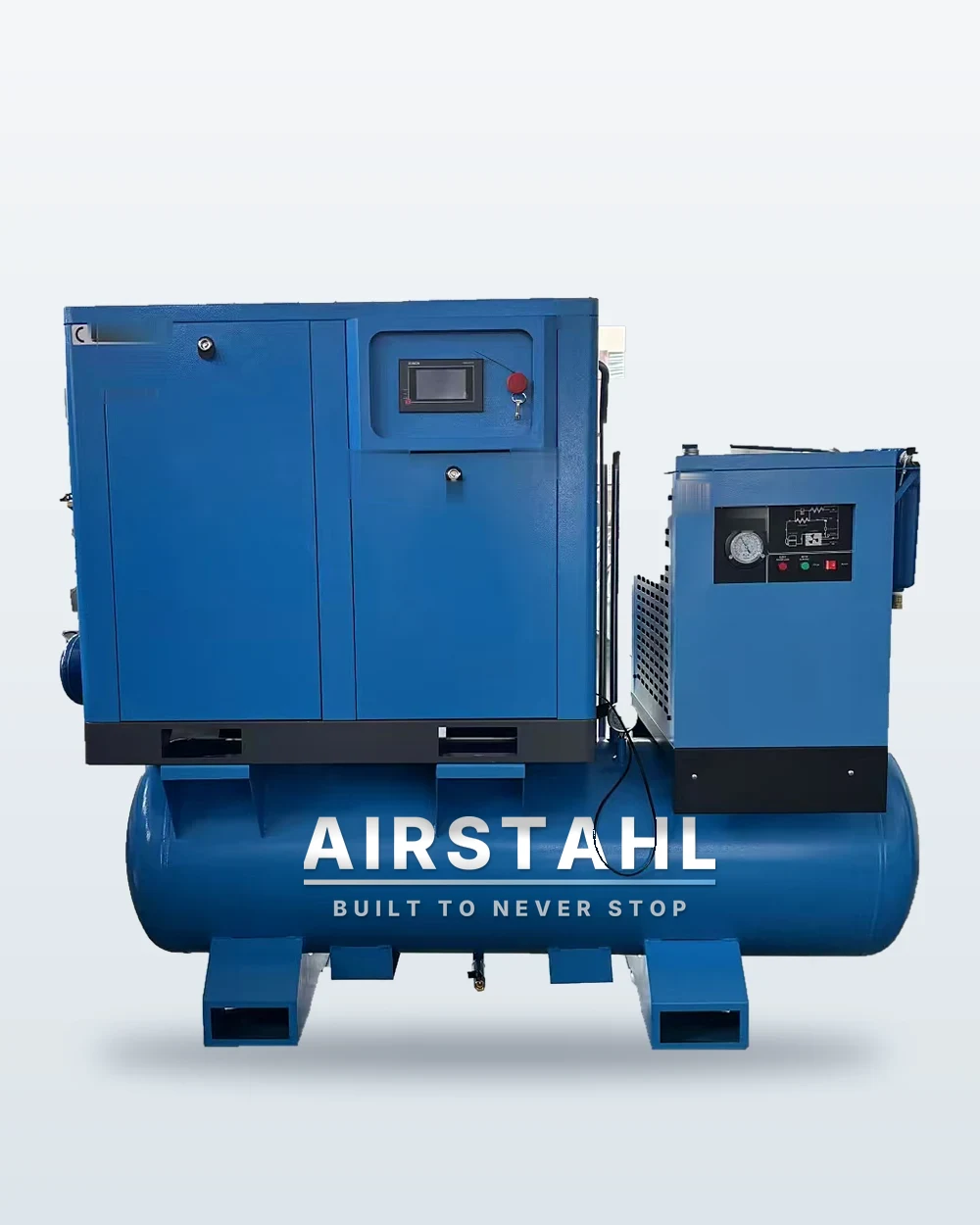 11kW
K 110Screw compressor 11 kW 4-in-1
Compressor, air receiver, refrigerated dryer and filtration combined on a single frame, at 11 kW.
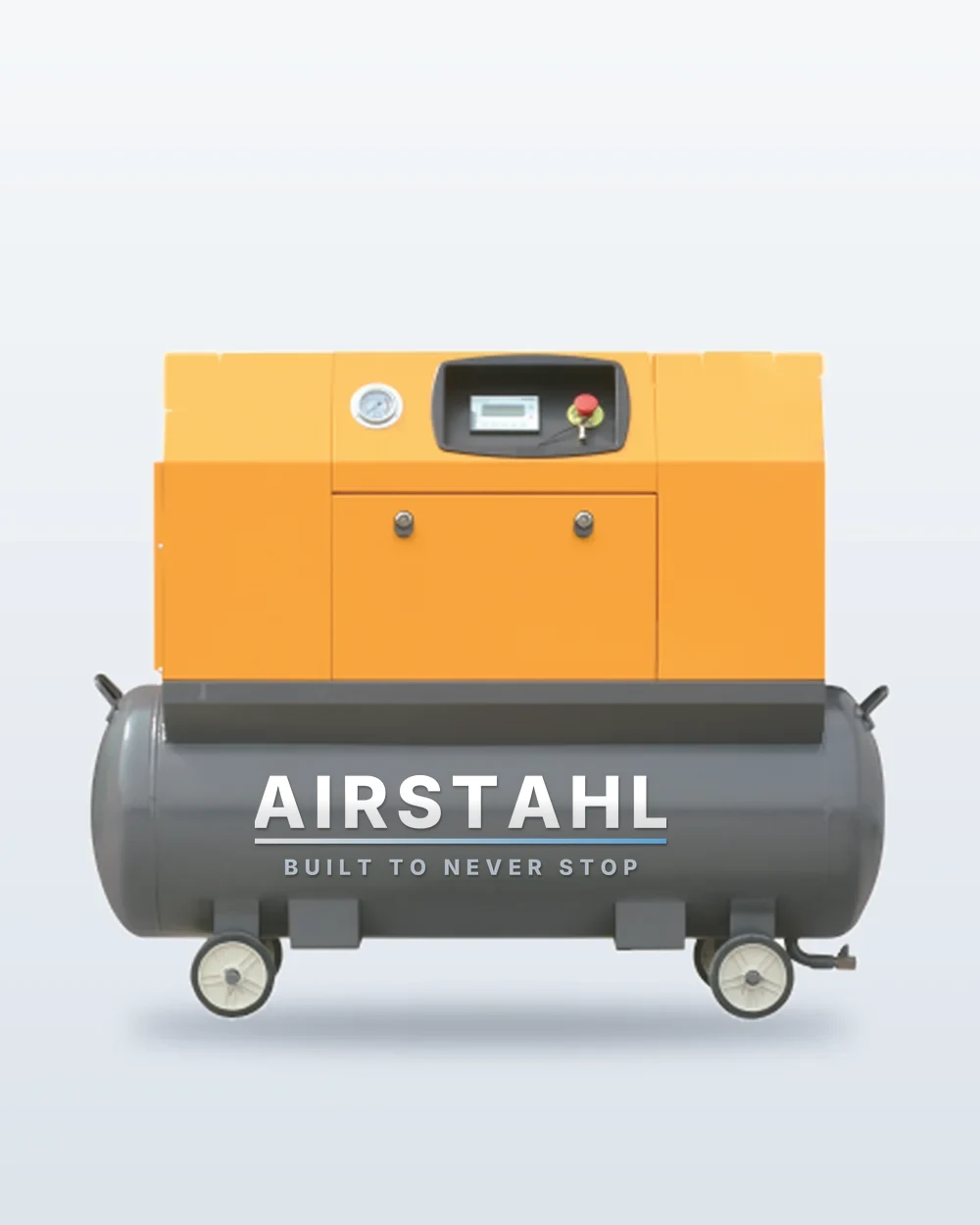 7.5kW
M 75Mobile screw compressor 7.5 kW
A plug-and-play screw compressor on a tank and wheels, easy to move from one workstation to another.
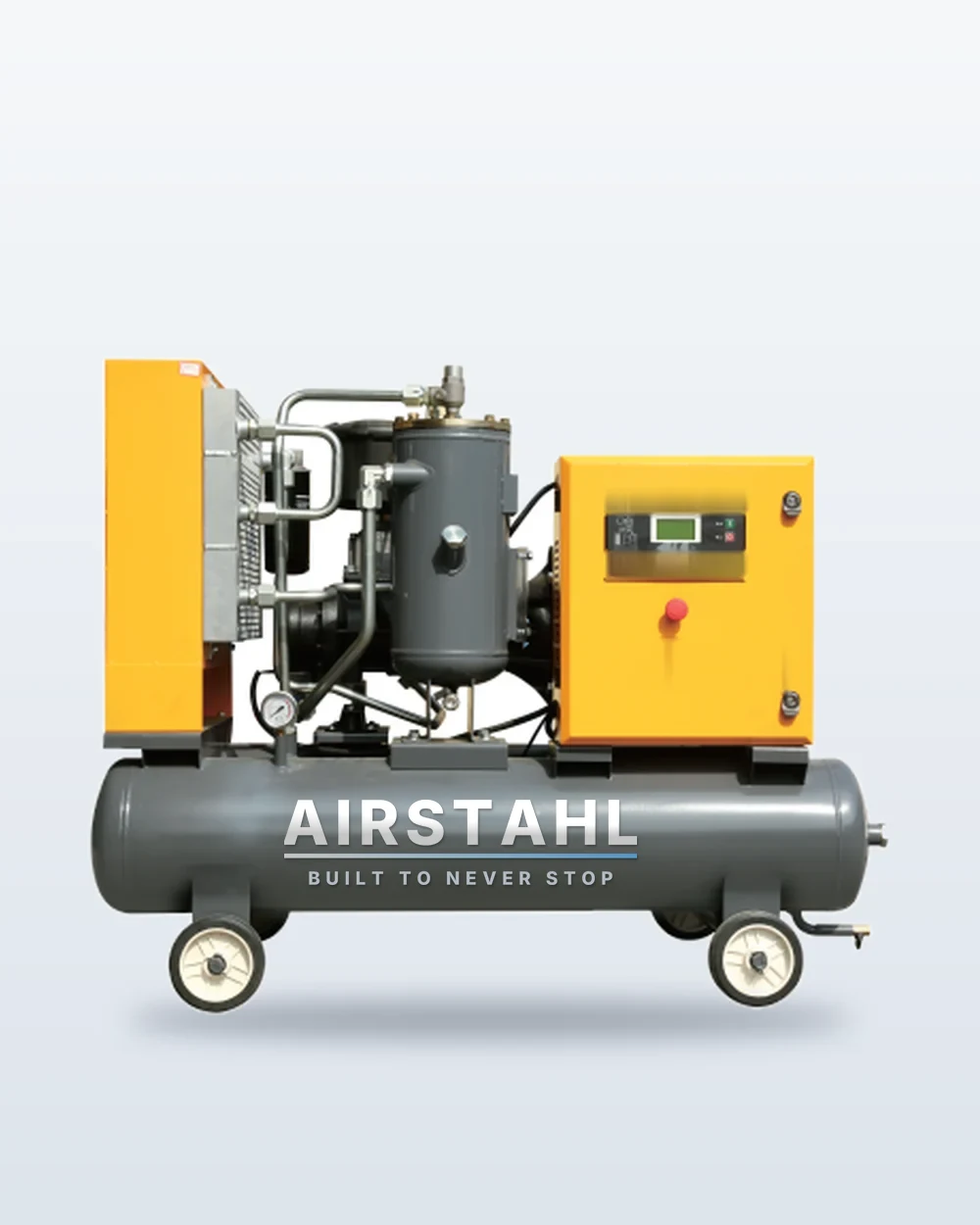 22kW
M 220Mobile screw compressor 22 kW
A plug-and-play screw compressor on a tank and wheels, easy to move from one workstation to another.
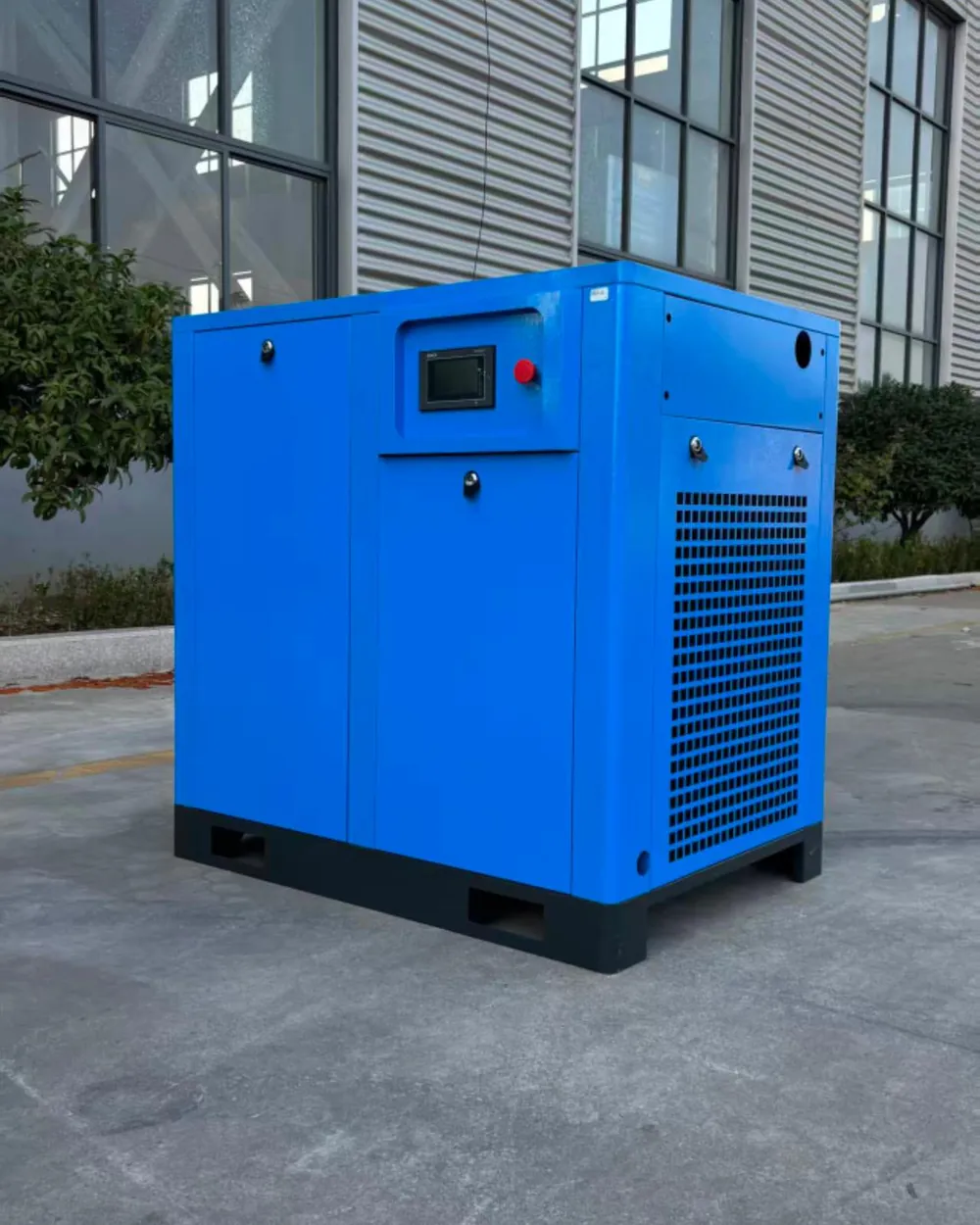 22kW
S 220 PMScrew compressor 22 kW permanent magnet
Permanent magnet motor, 10 bar: the industrial machine of the range.
Other trades
A project, a question?
We answer quickly and quotes are free. Tell us what you run on air and we'll point you to the right model.