Recycling and waste sorting
Compressor for recycling and waste sorting
Screw compressor for recycling and waste sorting: optical sorters with air jet ejection, balers, shredders, cleaning. Variable speed S series up to 132 kW.
In a materials recovery facility or a recycling plant, compressed air does the sorting. On an optical sorter, a camera or near-infrared sensor spots each object on the belt, and a bank of nozzles ejects it into the right stream with a short blast of air. Around the sorters, air drives the cylinders on balers and wire tiers, the rams and flaps on shredders, the pulse cleaning of dust collectors and the blow guns used to clean sensors, belts and machines. When pressure drops, sorting purity drops and the whole line slows down.
How much air does a sorting plant need?
The optical sorter almost always sets the size of the compressor. Its consumption depends on the machine width, the materials and above all the ejection rate: the more objects it has to blow out, the more air it uses. As an indication, an optical sorter needs anything from 2 to over 10 m³/min depending on size and settings, usually at 6 to 8 bar. Use the manufacturer's figure at your real ejection rate.
The other users weigh less. Indicative figures:
- baler and automatic wire tier: from a few dozen to a few hundred l/min, in bursts;
- dust collector pulse cleaning: around 100 to 300 l/min on average;
- cleaning blow gun: about 200 l/min while in use.
Example of a typical sorting plant, with two optical sorters rated at 4 m³/min each at 7 bar, a baler, a dust collector and three blow guns:
- sorters: 2 × 4 m³/min = 8 m³/min
- baler and tier: 0.2 m³/min
- dust collector: 0.2 m³/min
- blow guns: 3 × 0.2 m³/min × 50 % use = 0.3 m³/min
- total: 8.7 m³/min, plus a 20 % margin, so about 10.5 m³/min.
A site like this needs several compressors or one high-output machine. Our flow and pressure converter switches between l/min and m³/min, and the guide what size compressor do I need sets out the method.
Which compressor for recycling and waste sorting?
- A recycling site without optical sorting (baler, shredder, cleaning): the S 110, 1.7 m³/min at 8 bar, with a receiver and a dryer. It covers the cylinders, filter cleaning and several blow guns with room to spare.
- A line with one compact optical sorter: the S 150 (2.2 m³/min at 8 bar) or the S 220 PM (3.6 m³/min at 8 bar, 3.8 m³/min at 7 bar), with a buffer receiver close to the sorter to absorb ejection bursts. The air receiver size calculator helps you size it.
- A multi-shift plant with several sorters: several S 220 PM units in parallel (three machines give 10.8 m³/min at 8 bar, enough for the example above), or a larger S series compressor up to 132 kW, on request. With several machines, the site keeps its air while one of them is being serviced. These installations are handled as an industrial project.
Every S series compressor runs at variable speed. In sorting that is a real advantage: consumption follows the material flow, which changes from hour to hour. See variable speed or fixed speed.
What air quality does optical sorting need?
Ejection valves are fast, precise components. Water, oil or particles in the air foul them, make them stick and reduce sorting accuracy.
- Water. A refrigerated dryer removes moisture before the network. In a barely heated hall, where pipes cross cold zones in winter, a desiccant dryer gives a lower dew point.
- Oil. Our screw compressors are oil-lubricated and the air leaves them with traces of oil. Fine filters hold them back before the valves.
- Particles. These sites are dusty by nature. A general filter followed by a fine filter protects the sorter.
Sorter manufacturers state the required air class to ISO 8573-1 in their specifications. Our technicians size the dryer and filters with you to meet it.
Installation and maintenance
- A room sheltered from dust. Fibres, paper dust, glass or plastic fines: the compressor must draw in clean air. Install it in a closed, ventilated room with the intake on the clean side, and check the intake filter often. See installing a compressor room.
- Condensate drainage. An automatic condensate drain on the receiver, dryer and filters keeps water away from the valves.
- Leaks. Long pipe runs in a large hall and vibrating fittings make leaks expensive. See detecting and repairing leaks and put a figure on them with the leak cost calculator.
- Servicing. First service at 500 hours, then every 1,500 hours. On three shifts, those intervals come round within a few months: keep service kits in hand, or hand the follow-up to our technicians and partner dealers through our maintenance plans. During downtime, a hire compressor from 5.5 to 132 kW can take over.
AIRSTAHL compressors come with a 2-year warranty and spare parts available for 15 years. On an existing site, a compressed air audit shows where the energy goes.
To move forward, start with the configurator, estimate the bill with the electricity cost calculator, then describe your site (sorters, balers, shifts) in a quote request.
Frequently asked questions — Recycling and waste sorting
How much air does an optical sorter use?
As an indication, from 2 to over 10 m³/min depending on machine width, materials and ejection rate, usually at 6 to 8 bar. Use the manufacturer's figure at your real ejection rate: that is what sizes the compressor.
Which compressor for a sorting plant with several optical sorters?
Beyond what one S 220 PM delivers (3.6 m³/min at 8 bar), the answer is several S 220 PM units in parallel or a larger S series compressor up to 132 kW, on request. Several machines keep the air on while one of them is being serviced. Describe your sorters and shifts in a quote request.
Why choose a variable speed compressor for waste sorting?
The ejection rate changes with the flow and make-up of the waste, so air demand changes too. A variable speed compressor follows that demand instead of switching between load and idle. Every S series compressor runs at variable speed.
What air quality do optical sorter ejection valves need?
Dry, filtered air: water, oil and particles foul the solenoid valves and reduce sorting accuracy. Plan a refrigerated dryer, or a desiccant dryer if the network crosses cold zones, plus fine filters. The required ISO 8573-1 class is stated in the sorter manufacturer's specifications.
How do I protect a compressor in a dusty sorting plant?
Install it in a closed, ventilated room with the intake on the clean side, and check the intake filter often. Keep to the intervals: first service at 500 hours, then every 1,500 hours. On three shifts, keep a service kit in hand.
How should the buffer receiver of an optical sorter be sized?
On the ejection bursts, not on average consumption: volume (L) = air shortfall (l/min) × burst duration (min) × 1.013 ÷ accepted pressure drop (bar). For a 10-second burst that exceeds the compressor by 2,400 l/min, with a tolerated drop of 0.5 bar, you get about 810 L, so a standard 900 or 1,000 L receiver. See our article on the buffer receiver for an optical sorter.
Is a bigger receiver enough if the sorter's bursts come close together?
No. A receiver stores air, it does not produce any: the compressor's surplus refills it after each burst. If an S 220 PM delivering 3,600 l/min supplies a sorter that uses 3,000 l/min in normal running, 600 l/min are left to put 400 L back into the receiver, which takes about 40 seconds. If bursts come back faster, you need more flow, for example an S 150 as a top-up.
Can sorter settings reduce the air consumption of an optical sorter?
Often, yes. Where possible, set the sorter to eject the smaller fraction and let the other pass. If the target material makes up 70 % of the flow, blowing out the remaining 30 % uses much less air than the other way round. The sorter manufacturer will tell you whether this mode is compatible with the purity you need.
The recommended models
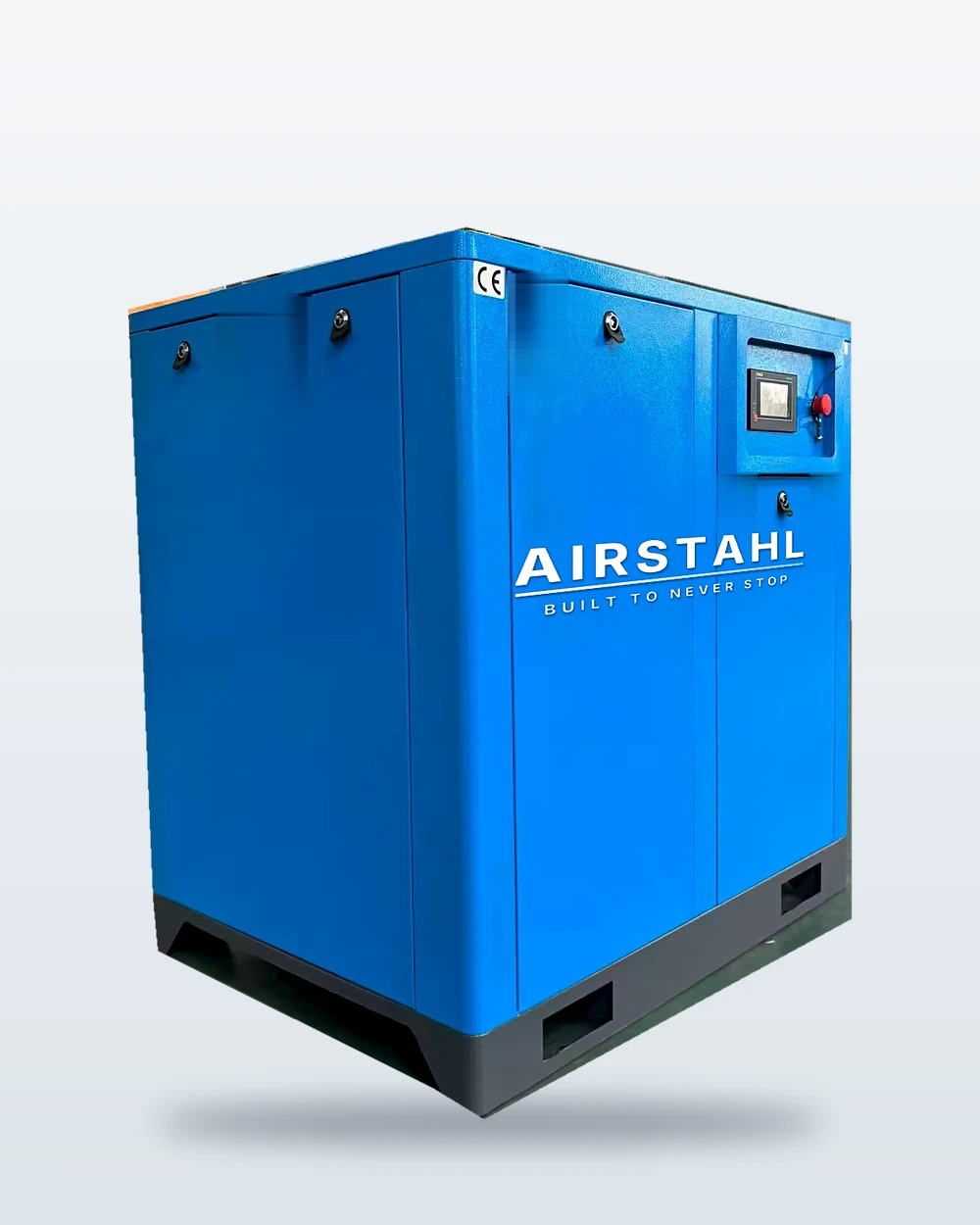 11kW
S 110Screw compressor 11 kW
The power to supply several workstations at the same time, without losing pace.
15kW
S 150Screw compressor 15 kW
For production workshops and truck workshops with high air consumption.
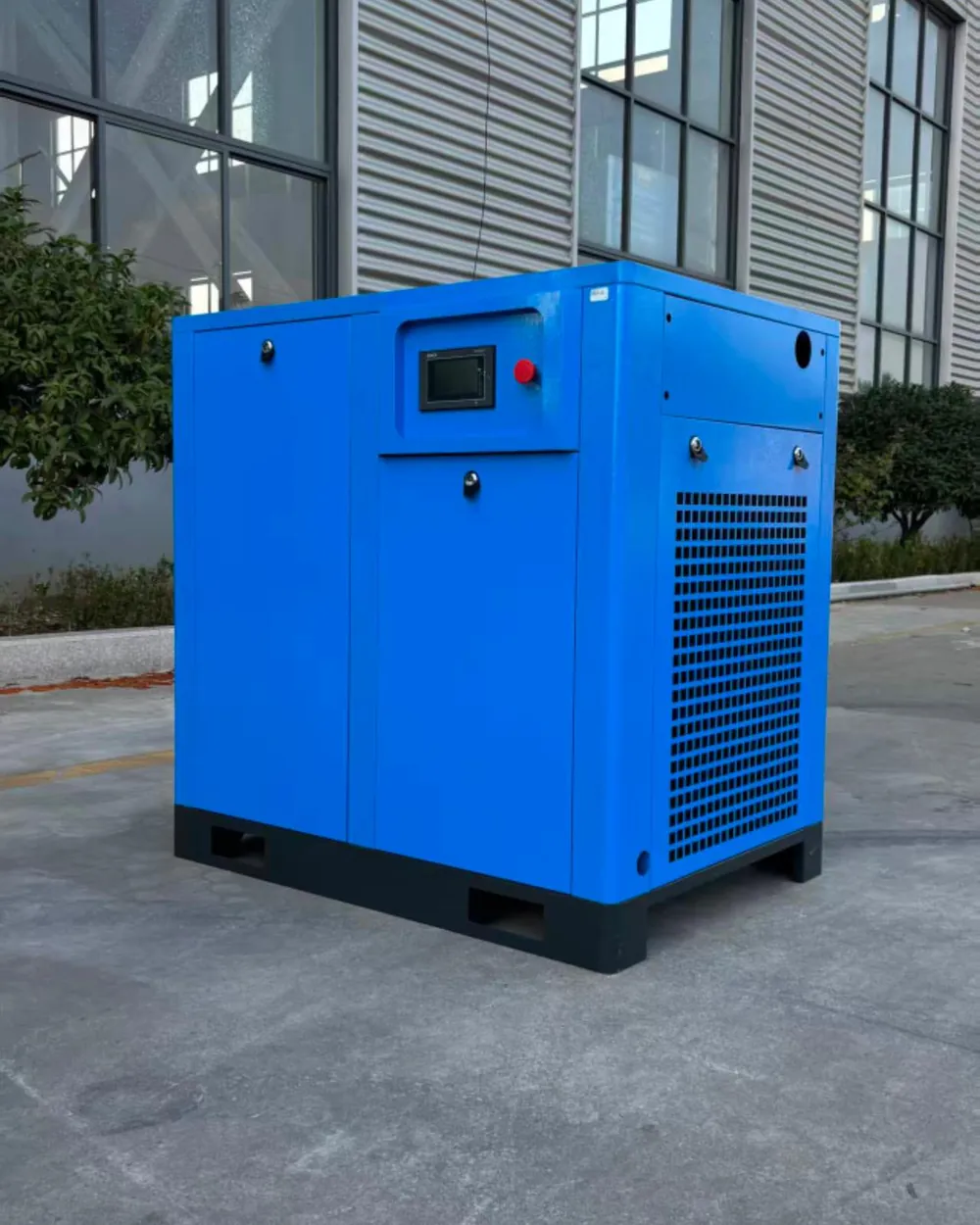 22kW
S 220 PMScrew compressor 22 kW permanent magnet
Permanent magnet motor, 10 bar: the industrial machine of the range.
Other trades
A project, a question?
We answer quickly and quotes are free. Tell us what you run on air and we'll point you to the right model.