Sawmill and timber industry
Compressor for sawmills and the timber industry
Screw air compressor for sawmills, planing mills and pallet plants: cylinders, clamps and continuous blow-off. Variable speed S series from 7.5 to 22 kW.
In a sawmill, compressed air keeps the line moving. Cylinders position logs and boards, clamps hold the timber on the saws and sorting tables, blow-off nozzles clear sawdust from blades and sensors, and the planer is cleaned as it runs. Further down the yard, the pallet shop runs on nailers, and some kilns open their vents or doors with air. This is not the hand tooling of a joinery shop. These are machines that use air all day, often on shifts, in heavy dust.
How much air does a sawmill need?
Add up everything that runs at the same time, then add a margin. There are three kinds of air users, and each is worked out separately.
- Cylinders and clamps. Their consumption can be calculated: cylinder volume × strokes per minute × absolute pressure. A double-acting cylinder with a 63 mm bore and a 200 mm stroke, at 6 bar and 10 cycles per minute, uses about 90 l/min. Line manufacturers often state this figure per machine, so ask for it.
- Continuous blow-off. A nozzle blowing non-stop on a blade or planer uses as much as an open blow gun, around 150 l/min. It is often the biggest single user, and the easiest one to cut.
- Intermittent tools. Cleaning blow guns and pallet nailers (around 80 l/min each) work in bursts. Thanks to the air receiver, count them at 50 %.
Example for a planing and stacking line, as a guide only: 4 cylinders and clamps (350 l/min), 2 continuous blow-off nozzles (300 l/min), 2 cleaning blow guns (150 l/min counted at 50 %), 3 nailers in the pallet shop (120 l/min counted at 50 %). Total: about 920 l/min. With a 25 % margin, aim for 1,150 l/min at working pressure. Our configurator runs this calculation tool by tool.
Which compressor for a sawmill?
A sawmill uses air both continuously and in waves: the line starts, stops and starts again. The S series is built for this. These are variable speed screw compressors: the motor slows down when demand drops instead of running unloaded.
- Small sawmill or pallet shop: the S 75. 1.1 m³/min at 8 bar (1,100 l/min), with 8, 10 or 13 bar to choose from. It supplies one saw with a few cylinders, the nailers and the blow-off.
- Sawmill with a planing or sorting line: the S 110 or S 150. 1.7 m³/min and 2.2 m³/min at 8 bar. For the example above, the S 110 covers the demand with room for one more machine.
- Multi-shift site with several lines and kilns: the S 220 PM. 22 kW, permanent magnet motor, 3.6 m³/min at 8 bar and 3.2 m³/min at 10 bar. Above that, the S series goes up to 132 kW on quotation: this is an industrial project we study with you.
On a site that cannot stop, two compressors are better than one large one: one keeps production going while the other is serviced.
What air quality does a sawmill need?
Cylinders and clamps need clean, dry air, not laboratory air. Water, though, is a real problem in a sawmill. Halls are often cold, pipe runs are long, and condensate rusts cylinders, makes sawdust stick in the valves and freezes in the lines in winter.
Fit a refrigerated dryer after the compressor, a filter upstream of the valves, and fine filters if part of the air is used for painting or marking pallets. Our compressors are oil-lubricated: the air class is defined with our technicians, according to ISO 8573-1.
Installation and maintenance
Sawdust is the compressor's enemy. The machine draws in ambient air to compress and to cool itself. In a dusty hall, the intake filter and the cooler clog quickly, the compressor runs hot and wears faster.
- A separate room, closed and ventilated, taking its air from a clean area. Our article on the compressor room sets out the rules.
- A clean room. Never let sawdust build up around a hot machine.
- The intake filter, checked more often than elsewhere. Keep a spare air filter on hand.
- The cooler, blown out regularly with the compressor switched off.
- Condensate draining, handled by an automatic drain.
On the S series, the first service is at 500 hours, then every 1,500 hours, with a reminder shown on the controller. On two shifts, 1,500 hours come round fast: count on a few months. Our service kits group the parts for each model, and our technicians and partner dealers can carry out the work. 2-year warranty, parts available for 15 years.
Describe your machines in the configurator, estimate your bill with the electricity cost calculator, or send us the list of your lines to request a quote.
Frequently asked questions — Sawmill and timber industry
Which compressor for a sawmill?
A small sawmill or pallet shop starts with the S 75 (1.1 m³/min at 8 bar). A sawmill with a planing or sorting line takes the S 110 or S 150 (1.7 and 2.2 m³/min at 8 bar). A multi-shift site with several lines chooses the S 220 PM, and above 22 kW the S series goes up to 132 kW on quotation.
How do I calculate the air consumption of a pneumatic cylinder?
Multiply the cylinder volume by the number of strokes per minute, then by the absolute pressure (working pressure + 1). As a guide, a double-acting cylinder with a 63 mm bore and 200 mm stroke, at 6 bar and 10 cycles per minute, uses about 90 l/min. Then add up every cylinder that works at the same time.
Why choose a variable speed compressor for a sawmill?
A sawmill's air demand changes constantly: the line starts, stops and starts again. An S series compressor matches its motor speed to the demand instead of running unloaded between cycles. Our electricity cost calculator shows what compressed air adds to your bill.
How do I protect a compressor from sawdust?
Install it in a separate, closed and ventilated room that takes its air from a clean area. Check the intake filter more often than elsewhere, blow out the cooler regularly with the compressor switched off, and never let sawdust build up around the machine.
Does a sawmill need an air dryer?
Yes, in most cases. Halls are cold and pipe runs long: condensate rusts cylinders, makes sawdust stick in the valves and freezes in winter. A refrigerated dryer and an automatic drain solve the problem; the air class is defined with our technicians according to ISO 8573-1.
How can I cut the consumption of continuous blow-off nozzles?
A nozzle left open all the time uses around 150 l/min, like a blow gun that is never released. The two steps that pay off most: shut the nozzle off when the machine is not working, with a solenoid valve controlled by the machine, and lower its pressure with a dedicated regulator. Going from 6 to 3 bar on the gauge brings the nozzle down to about 57 % of its flow. See our article on continuous blow-off nozzles.
Which compressor for a pallet manufacturing shop?
It is chosen from the nailers firing at the same time and the cylinders on the nailing table. As a guide, margin included: about 490 l/min for a manual shop with six nailers (S 55 with an air receiver, or K 75), about 695 l/min for a semi-automatic table (K 75, 1.1 m³/min at 8 bar), about 1,500 l/min for an automatic line (S 110, 1.7 m³/min at 8 bar).
Why does the sawmill compressor shut down in hot weather?
It is protecting itself against overheating, and the cause is almost always around it: a room that is too hot with hot air recirculating, a cooler clogged with sawdust, a blocked air filter, a low oil level. Blow out the cooler with the compressor stopped, check the filter and get the hot air out of the room. Before restarting, note the message and the temperature shown by the controller: they point to the cause.
The recommended models
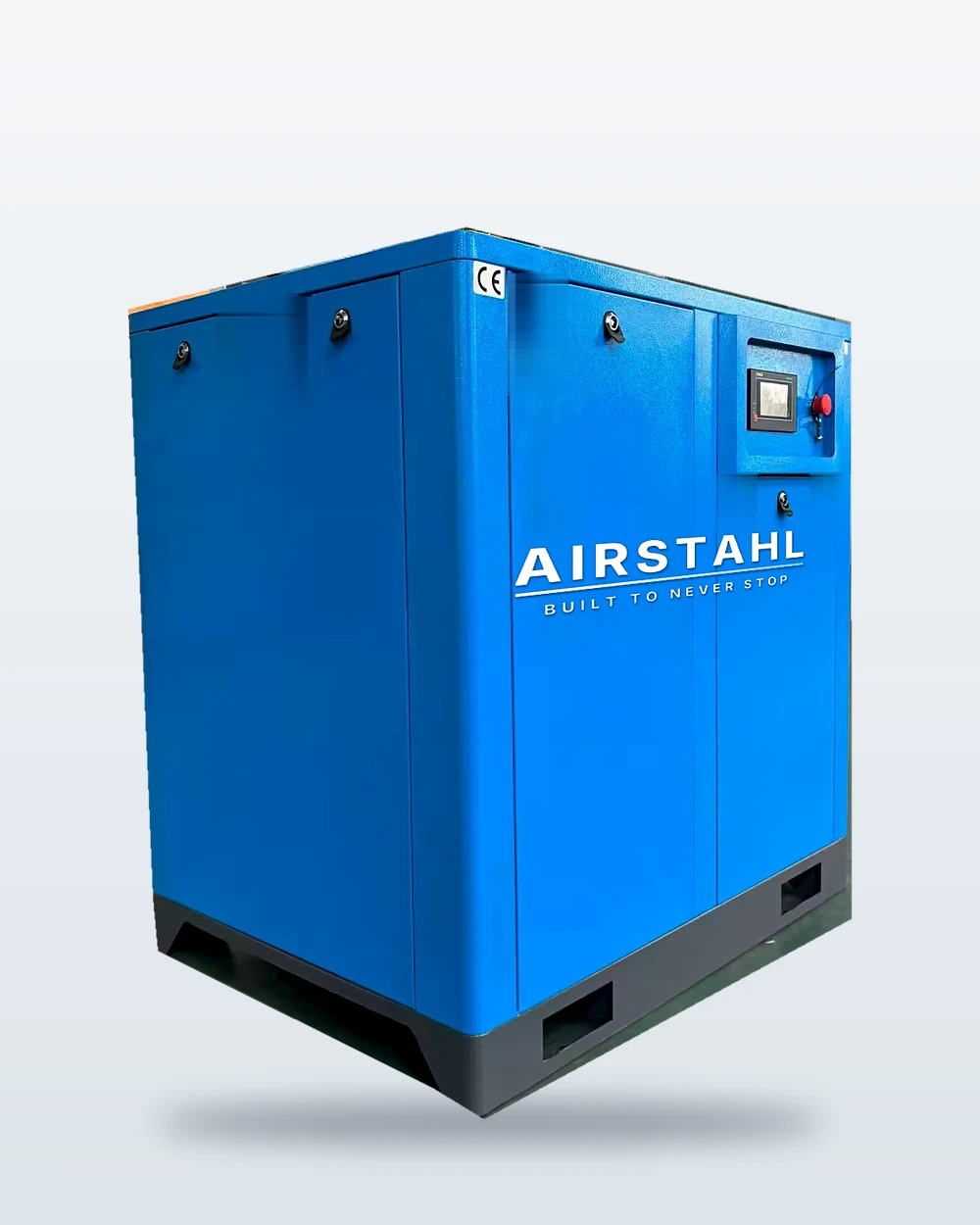 7.5kW
S 75Screw compressor 7.5 kW
The power to supply several workstations at the same time, without losing pace.
11kW
S 110Screw compressor 11 kW
The power to supply several workstations at the same time, without losing pace.
15kW
S 150Screw compressor 15 kW
For production workshops and truck workshops with high air consumption.
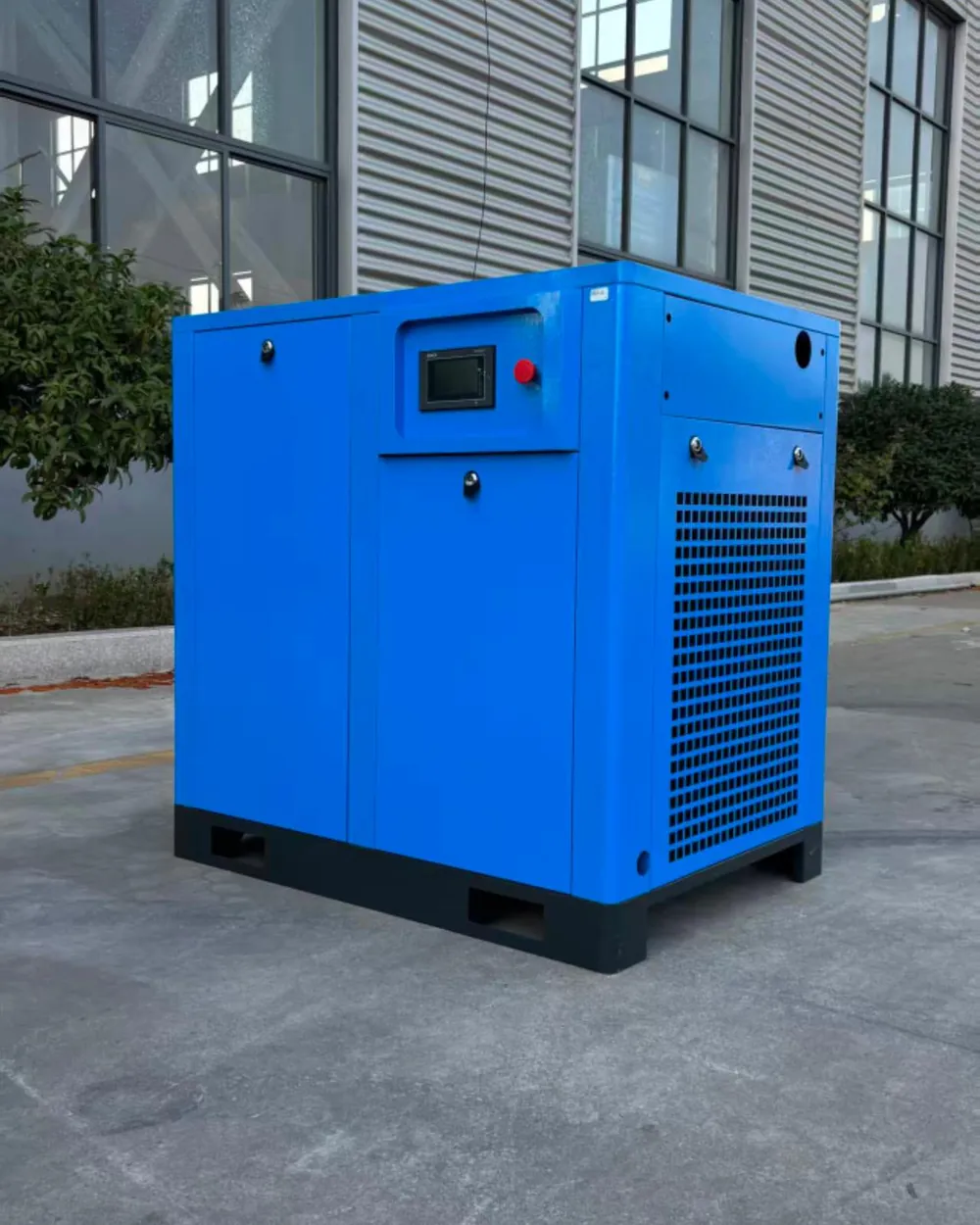 22kW
S 220 PMScrew compressor 22 kW permanent magnet
Permanent magnet motor, 10 bar: the industrial machine of the range.
Other trades
A project, a question?
We answer quickly and quotes are free. Tell us what you run on air and we'll point you to the right model.