Grain silo and agricultural cooperative
Compressor for grain silos and agricultural cooperatives
Screw compressor for grain silos and farm co-ops - gate and hatch cylinders, bag filter cleaning, grain dryers, workshop. S and K series, 2-year warranty.
At a grain storage site, compressed air is what moves the handling system. It drives the cylinders on slide gates, bin discharge hatches and diverter valves. It pulses the bag filters on the dust collectors clean, blows down bins and intake pits, operates the dryer hatches and runs the maintenance workshop. If the compressor stops during harvest, the gates stay shut and the trucks wait. For the compressor on the farm itself, see our page on compressors for agriculture.
How much air does a grain silo need?
Add up everything that runs at the same time at the peak of intake. The figures below are indicative, typical orders of magnitude. The data sheets of your own equipment take precedence.
- Bag filter cleaning (pulse jet): roughly 100 to 300 L/min per dust collector, depending on the number of bags and the pulse frequency.
- Gate, hatch and diverter cylinders: each stroke uses little air, but twenty or so cylinders often average 50 to 150 L/min during the season.
- Blow gun: 200 to 300 L/min while it is blowing.
- Workshop: about 300 L/min for a 1/2" impact wrench, 500 L/min or more for a grinder.
Example: a collection silo with a grain dryer. Two dust collectors at 200 L/min: 400 L/min. Twenty cylinders: 100 L/min. A blow gun used half the time: 125 L/min. An impact wrench used a quarter of the time: 75 L/min. Total: 700 L/min. Add 25% for network leaks, wear and future extensions: 875 L/min, or about 0.9 m³/min. A compressor delivering 1.1 m³/min at 8 bar covers this.
Filter cleaning needs steady pressure at the filter. On a large site the network loses pressure from one building to the next, so a buffer receiver close to the dust collectors keeps a reserve right where the pulses happen.
Which compressor for a silo or cooperative?
Medium-sized collection site: the K 75 4-in-1
The K 75 combines the screw compressor, a 420 L receiver, a refrigerated dryer and filtration on one frame. It delivers 1.1 m³/min at 8 bar. Its variable speed drive follows uneven demand: cylinders that move in bursts, filters that pulse in cycles.
Silo with a dryer and several dust collectors: the K 110 or S 110
With 1.7 m³/min at 8 bar, the K 110 supplies several filters, the handling system, the dryer and the workshop, with a 340 L receiver, dryer and filtration built in. The S 110 gives the same flow as a standalone compressor, for sites that already have a receiver and dryer.
Large site running shifts: the S 150 or S 220 PM
For a cooperative that receives, dries and ships around the clock, the S 150 delivers 2.2 m³/min at 8 bar and the S 220 PM, with its permanent magnet motor, 3.6 m³/min at 8 bar. Pair them with a receiver and dryer sized for the site. The S series goes up to 132 kW on request.
Light pneumatic conveying, such as sending samples to the lab, can run off the same network if the flow allows. Pneumatic conveying of grain in bulk has to be calculated with the supplier of the system: it is an industrial project we quote for.
What air quality does a grain silo need?
- Water. This is the main enemy. In a bag filter, moisture makes the dust stick and pulsing no longer cleans the bags. It also jams solenoid valves and rusts cylinders. A refrigerated dryer is the minimum. For lines that run outdoors in hard frost, a desiccant dryer prevents freezing. Our article which air dryer to choose compares the two.
- Dust. The compressor draws in the air around it. Grain dust clogs the intake filter and the cooler, and the machine runs hot. Take the intake air from a clean area.
- Oil. Our compressors are oil-lubricated, and the filtration traps oil aerosols. If the air comes into contact with the grain, define the air class with our technicians using our guide to ISO 8573-1.
Installation and maintenance
- The room. A clean, ventilated, frost-free plant room, away from the handling system and outside any ATEX-classified zone. Have the location approved by your safety manager.
- Condensate. An automatic condensate drain empties the receiver without anyone having to remember. Condensate contains oil, so collect it and have it treated. See our article on condensate draining.
- During the season. Check the intake filter every week and blow out the cooler as soon as it collects dust.
- Servicing. First service at 500 hours, then every 1,500 hours, with a reminder shown on the controller. Do it before harvest, not during. Our service kits group the parts for each model. 2-year warranty, spare parts available for 15 years.
- Backup. Compressor hire, from 5.5 to 132 kW, maintenance included and with no long-term commitment, adds capacity for the season or covers a machine under repair.
Build your installation with the configurator, estimate your air reserve with the air receiver size calculator or describe your site in a quote request.
Frequently asked questions — Grain silo and agricultural cooperative
What compressor flow does a grain silo need?
Add up bag filter cleaning (indicatively 100 to 300 L/min per dust collector), the gate and hatch cylinders, blow guns and the workshop, then add a 25% margin. A collection silo with two dust collectors and a grain dryer often comes to around 0.9 m³/min, which the K 75 (1.1 m³/min at 8 bar) covers. Above that, the K 110 or S 110 deliver 1.7 m³/min at 8 bar.
Do pulse-jet bag filters need dried compressed air?
Yes. Moisture makes dust stick to the bags, jams the solenoid valves and rusts the cylinders. A refrigerated dryer is the minimum, and the K series already has one built in with filtration. For lines that run outdoors in hard frost, a desiccant dryer prevents freezing.
Where should the compressor go on a silo or cooperative site?
In a clean, ventilated, frost-free plant room, away from the handling system and outside any ATEX-classified zone. Have the location approved by your safety manager. Take the intake air from a clean area, because grain dust clogs the intake filter and the cooler.
Screw or piston compressor for an agricultural cooperative?
A screw compressor. During the season, filter cleaning and cylinders need air all day, and a screw compressor is built for continuous duty. Our S and K series have variable speed drives that follow uneven demand. A piston compressor remains a good fit for intermittent use, on the farm for example.
How do I avoid a compressor breakdown during harvest?
Service the machine before the season: first service at 500 hours, then every 1,500 hours, with a reminder on the controller. Check the intake filter weekly and keep a service kit in stock. For extra capacity or backup, compressor rental from 5.5 to 132 kW, maintenance included and with no long-term commitment, takes over.
Does pulse-jet cleaning of bag filters need high pressure?
No, above all it needs stable pressure. The filter manual gives the working pressure of the header, and an 8 bar version suits most cases. Only go to 10 bar if the manual requires it, because flow drops: the K 75 goes from 1.1 m³/min at 8 bar to 0.95 m³/min at 10 bar. A header that does not refill properly gives weak pulses, and the bags gradually clog. See our article on pulse-jet cleaning of bag filters.
Does the whole silo air flow need a desiccant dryer?
Not necessarily. Classify each section of the network as heated room, unheated building or outdoors, and note the lowest temperature it sees in winter. If only a few branches are at risk of freezing, a refrigerated dryer for the whole site plus a desiccant dryer on the exposed branch is enough, for example 0.3 m³/min instead of 1.7 m³/min. The dryer is smaller, and its regeneration only uses air on that branch.
How do I size a buffer receiver at the end of a long silo network?
Start from the flow to cover at the end of the line, the reserve time you want and the acceptable pressure drop in the receiver: V = Q × t ÷ Δp. Example, as a guide: a dust collector and the cylinders of a tower use 250 L/min; for 2 minutes of reserve between 7.5 and 6.5 bar, V = 250 × 2 ÷ 1 = 500 L. If the receiver stands in an ATEX zone, its drain and fittings must be suitable for that zone: have this validated.
The recommended models
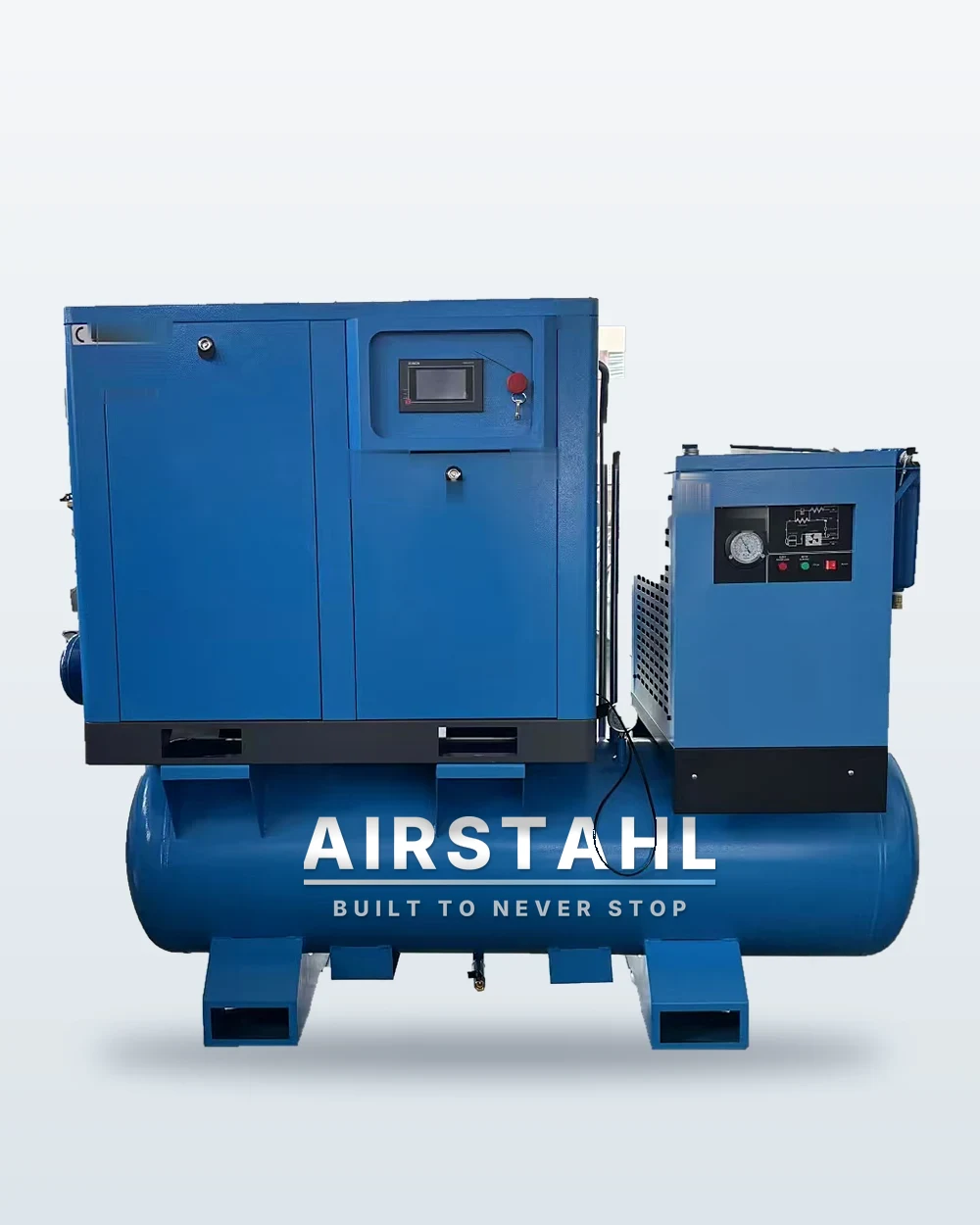 7.5kW
K 75Screw compressor 7.5 kW 4-in-1
Compressor, 420 L air receiver, refrigerated dryer and filtration combined on a single frame.
11kW
K 110Screw compressor 11 kW 4-in-1
Compressor, air receiver, refrigerated dryer and filtration combined on a single frame, at 11 kW.
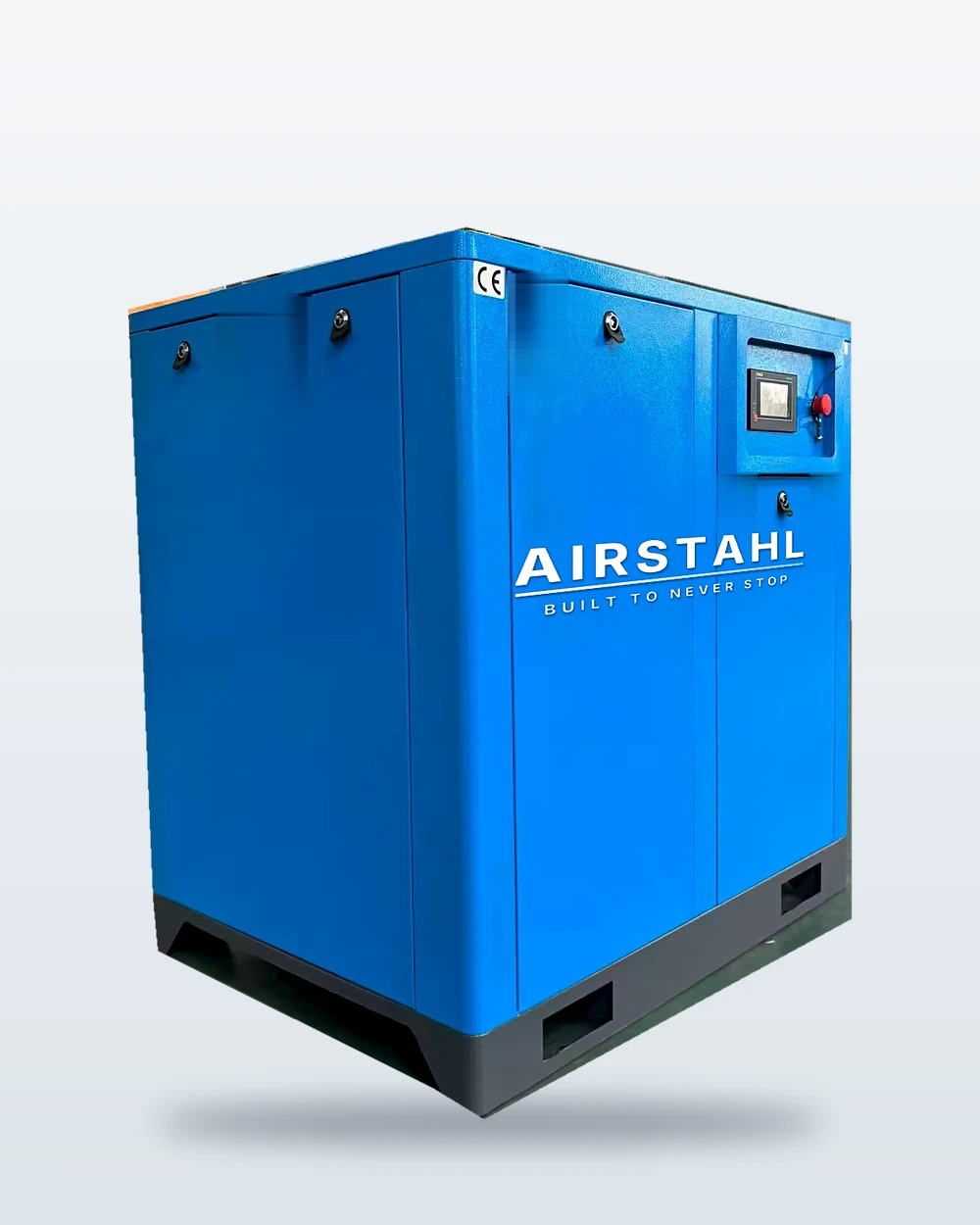 11kW
S 110Screw compressor 11 kW
The power to supply several workstations at the same time, without losing pace.
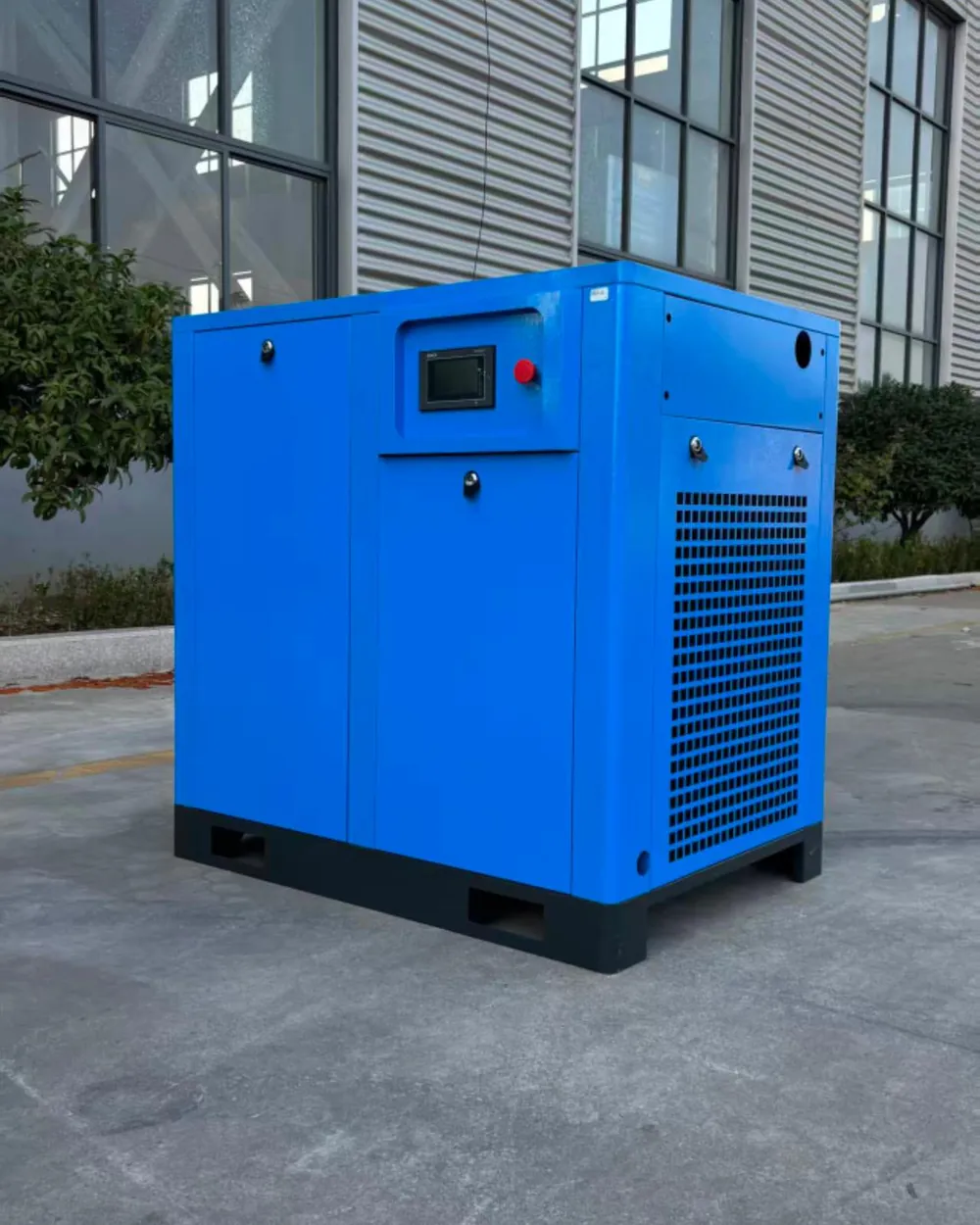 22kW
S 220 PMScrew compressor 22 kW permanent magnet
Permanent magnet motor, 10 bar: the industrial machine of the range.
Other trades
A project, a question?
We answer quickly and quotes are free. Tell us what you run on air and we'll point you to the right model.